Art making ideasi

Ideas. Inspiration. A little creative mischief.

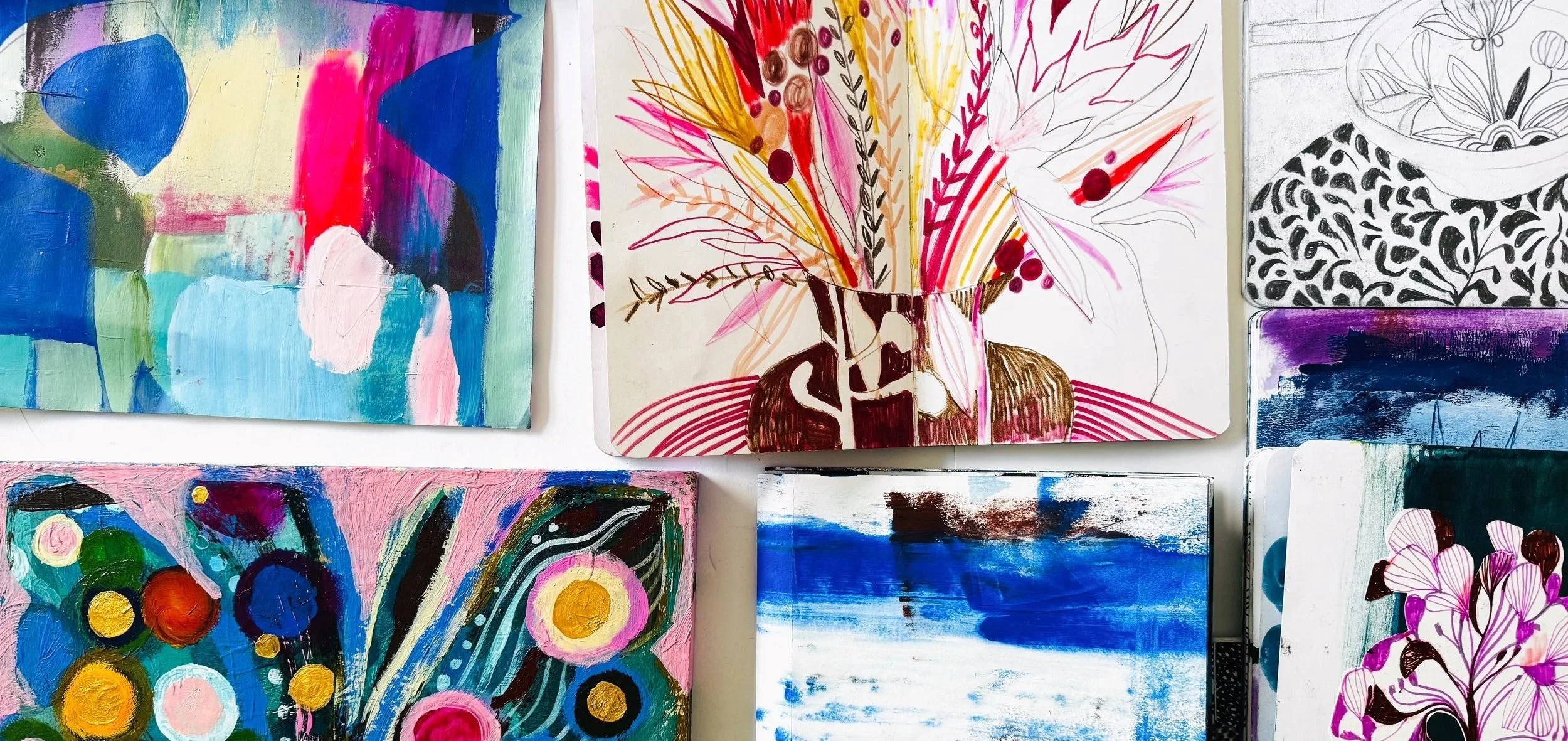
If you’re drawn to abstract and semi-abstract art, sketchbooks, colour and a little creative mischief, this is your corner of the internet.

Here you’ll find stories, videos, inspiration, art making advice and gentle nudges to help you create art that feels exciting to you.
Helen Wells Helen Wells

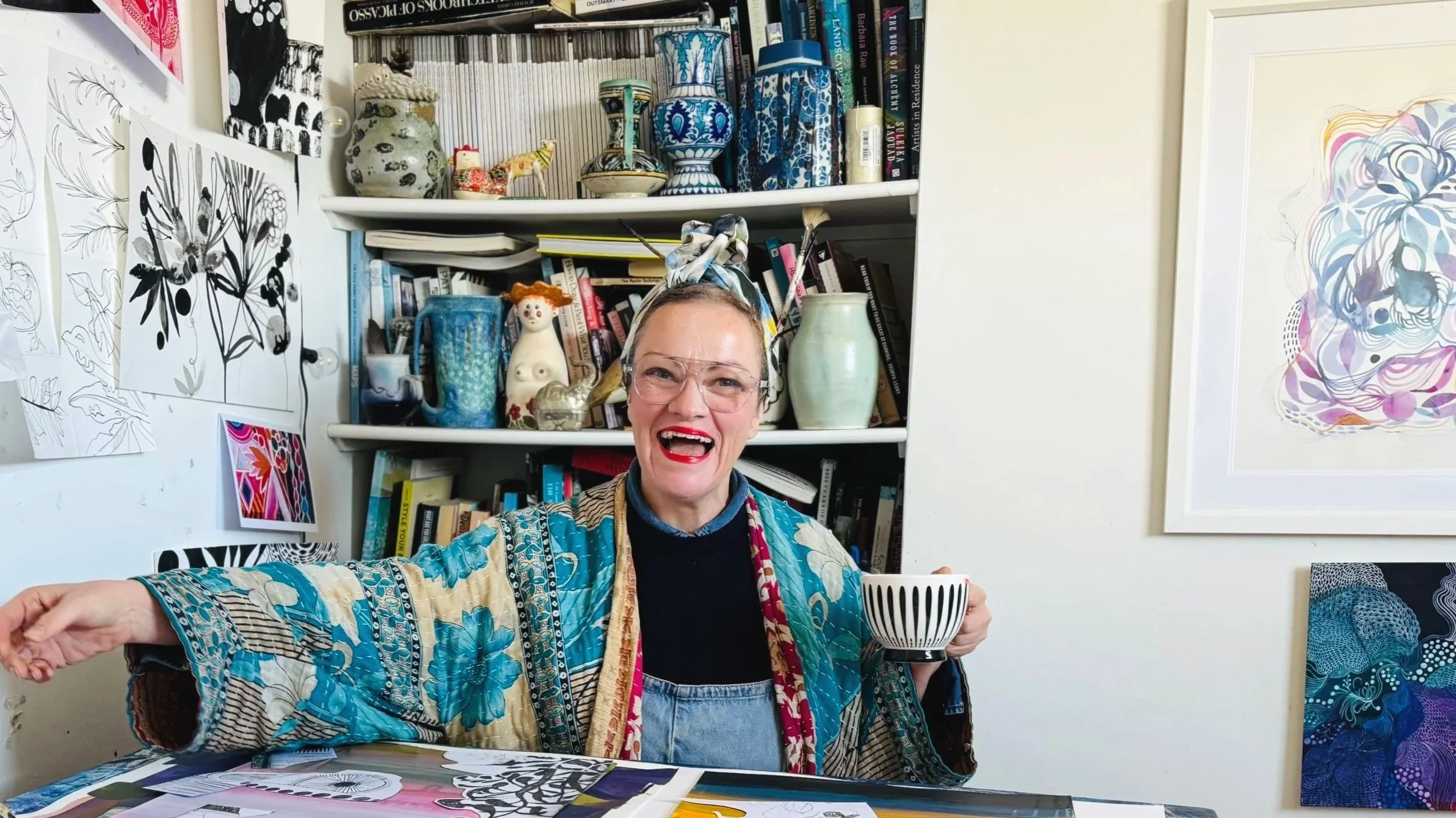
Getting back into making: sketchbook pages & low expectations

This video is about picking up the thread of my creative practice after a bit of a pause…
Creating art is a process of unpacking the things in life which fascinate; a wonderful way to explore obsessions and better understand curiosities. Creativity is a process of discovery and exploration.

By making art, I have discovered more about my self and the world I inhabit.

It has encouraged me to meet myself on the page, to become clearer on what moves me, motivates me, interests me and lights me up. To follow the threads of my curiosity and weave them together.

Connecting with the good bits

The process of creating art has ignited multiple and diverse love affairs for ancient textiles, seaweed, fossils, found patterns, painted ceramics, trees roots, sacred geometry, weeds, patterned rugs, reflections on water, hand embroidery, folk art, iridescence....

It has connected me to the world around me in a tangible life-enriching way. I notice more of what I am curious and fascinated by.

Connecting to ourselves

It has also prompted me to tune-in to my own sensibilities. Why do I create art in the way that I do? What is my art about? I would say my art is about delightful details, beauty in the mundane, seeking and finding, layers of complexity, reveling in colour, fragments of wonder and awe, exuberance and control, moments of joy, combinations and juxtapositions, threads through time…

I want my art to feel expressive, joyful, combine exuberance with quietness, be bright, playful, interesting, complex. This is also how I want my life to feel, what excites me in my art is what I seek in my life and what I seek in my art is what excites me in life..

Read More
Helen Wells Helen Wells

Vessels of Colour

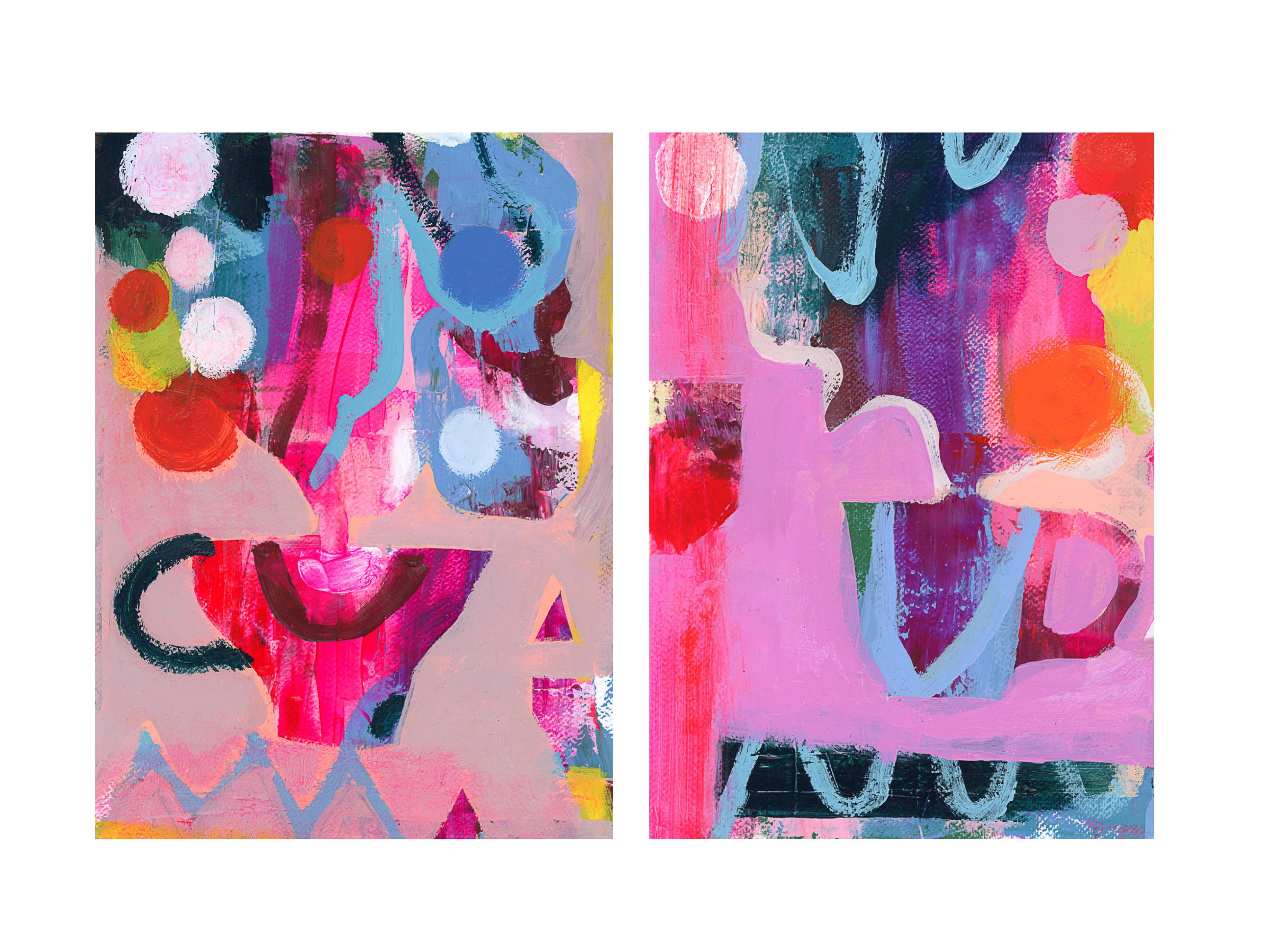
A new collection of 18 small acrylic paintings on paper, inspired by sketchbook explorations.
A new collection of small, original works.

I’m so pleased to share this new collection of 18 small, original acrylic paintings on paper now available to purchase directly from my studio.

Vases, vessels, cups and mugs have always fascinated me. Small, intimate, domestic objects of beauty. They feel symbolic, a container of life, an emptiness ready to be filled. They hold memory, usefulness, beauty. Often handmade and handheld. A moment of decorative delight. Always purposeful. A small reminder that ordinary objects can carry deep meaning.

These new works on paper are inspired by this love of vases, vessels, cups and containers. My hope is that these small paintings are a joyful exploration of these forms, containers of meaning, connection and memory.

SOLD

These paintings began life as drawings of familiar objects in my sketchbook, things from my home, cups, jugs, small vases. Those sketches were then reimagined in layers of expressive paint, shifting from the everyday into something more abstract and more symbolic.

Playful, botanical, bursting with energy, like magical genies escaping from painted lamps.

These paintings have multiple layers of rich, textured colour. You can often see traces of earlier marks still visible beneath the surface, giving the work a sense of depth, a history, a feeling of something antiquated and treasured.

They are bold and joyful, but also intimate and personal, the way a well-worn teacup might feel: treasured and full of story.

SOLD

I was recently flipping through an old notebook, one from more than twenty years ago and found a line I had written to myself:

“I love the organic and the ornamental.”

It made me smile. These new paintings feel like a continuation of that thought. A little ornamental. A little organic. Something held. Something growing.

These paintings were created layer by layer. Each one is unique. I loved painting them and I hope that the joy of their creation is evident in each painting.

Exploring the ideas in my sketchbook…

Cutting up shapes to develop ideas


View the full collection in my online store:


Read More
Helen Wells Helen Wells

Art, growth, change and sketchbooks

Notes from my studio, a year of sketchbooks and a sneak peek at my new series of paintings…
Music credit: Breathe in, breath out by Ludlow via Epidemic Sound

Notes on my creative practice

This time of year always finds me in a reflective mood. It prompts me to think deeply about my creative practice, where I am and where I want to be.

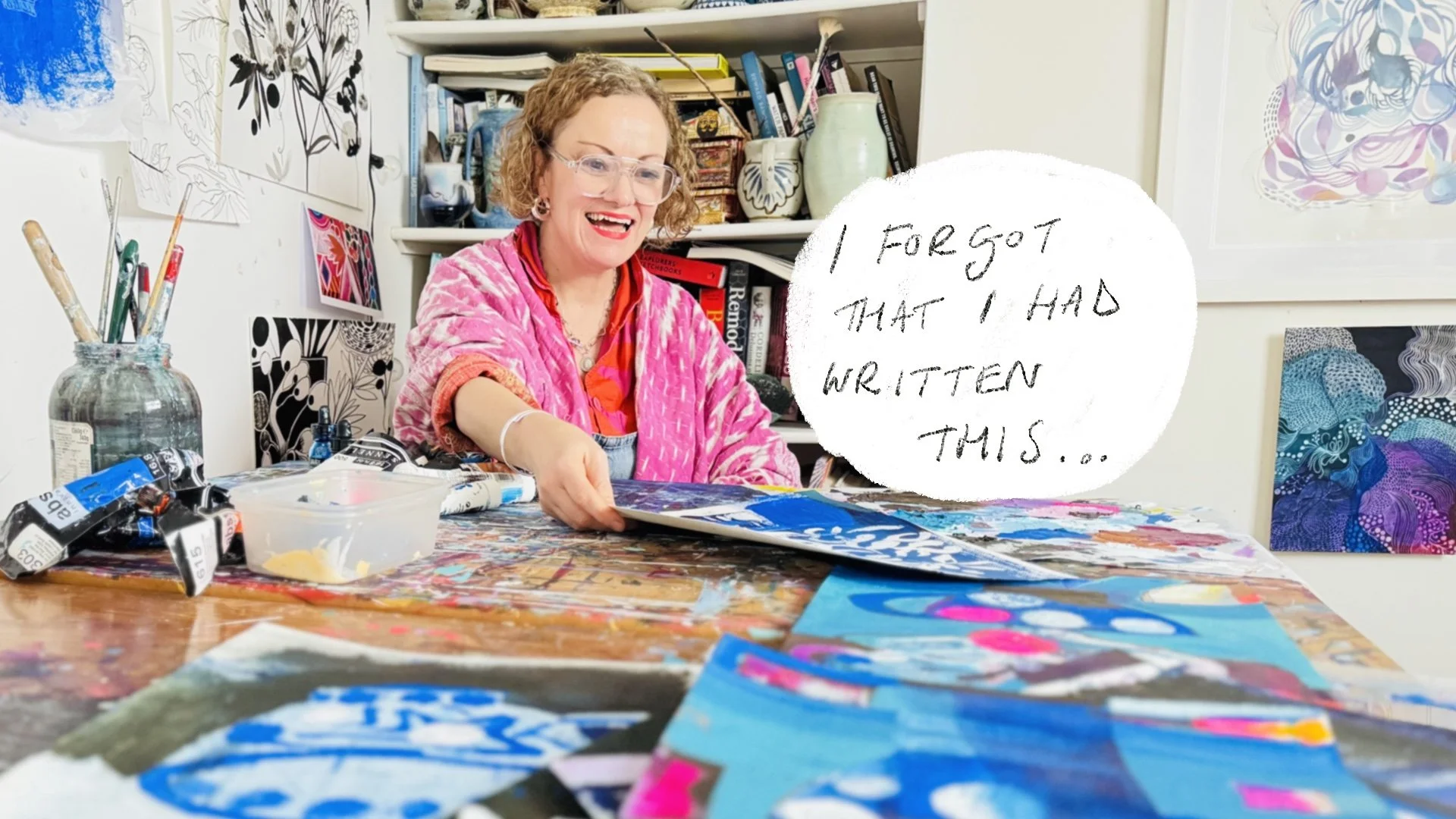
Last year, I wrote some notes called "Things to remember/my guiding principles," all about my creative practice. Ironically or perhaps entirely predictably, I then forgot all about them. I often write notes about my art and art-making, which helps me to think, solidify and organise my thoughts.

These particular ‘notes to myself’ seemed to be about the need to strive less and give myself more space and time. Let ideas percolate and grow. Slow down. No need to always be on and productive. Give ideas enough time to become. Let things unfold and unfurl.

Start, stop, more, less.

I often use a simple ‘start, stop, more, less’ framework to review my creativity and shepherd my thoughts. I might revisit my old notebooks and look back over what I have written. I get my sketchbooks out and look at what I have created. I think about mindset, energy, process, subject, approaches and ambitions. I consider what excites, enriches, or diminishes my enthusiasm.

Although I forgot I had written the exact list of things to remember, the wisdom contained in its words was clearly evident in how I navigated this year. I gave the ideas more time to become…

Making more space

With this mindset, I stopped pushing as hard this year and slowed my output, making more space for fun, creative moments that didn’t need to be productive. I created simply for joy, letting ideas grow slowly. I eased up on myself, lowered expectations and worried less.

This approach is not easy for me, as art is both my passion and my livelihood. I am delighted that art is my job, but it also brings pressure. When creativity also pays the bills and mortgage, staying carefree can feel irresponsible or even foolhardy, at least, I sometimes think so. In the past, to escape doubt or unpredictability, I’ve simply worked harder: more hours, more effort, more output.

A shift in perception

I have found that over the last decade or so of professional art-making, I have traveled through many different terrains, some of which demand exceptional effort and others that demand ease.

This year, I stopped pushing quite so hard and started going with the flow more. I loosened the reins, approached things differently, and lowered my expectations. I turned down a few high-profile opportunities that could have advanced my career, but would have taken all my time.

I gave myself more time and spaciousness to paint and create without an end goal or deadline. More than anything, it was a shift in perception: I worried less and trusted myself more. I invited in more fun, let ideas grow, and I found an expansiveness and a genuine excitement in my work.

Everyone is different and our creativity goes through cycles that require different energies and effort levels, sometimes we need to reach and sometimes we need to let go. I find the start, stop, less, more thought process so useful for framing my thoughts on my creative needs…perhaps you may find it useful to.

Types of sketchbook

Here are some of the sketchbooks I like, but sketchbooks are a personal preference and come in so many different shapes, sizes and varieties, the sketchbook that is right for me, may not be right for you. 

The best sketchbook to use is always the one you already own. 

  1. The Venezia Book from Fabriano

  2. Stillman & Birn, Zeta Range

  3. The Ebony Artist Book from Daler Rowney (this is the large A3 size sketchbook)

  4. Dylusions Creative Journal Large from Ranger

(Some of these links are affiliate links, if you buy something through them, I might earn a small commission, at no extra cost to you. I only ever share the products that I actually use. )
Read More
Helen Wells Helen Wells

Colour and comfort zones

This week I’ve been thinking about creative comfort zones
and the small ways we can choose to step beyond them.
“On a rainy day, colours begin to glow; that’s why a cloudy, rainy day is the kind I like best. That’s the kind of day when I can work.”

Friedensreich Hundertwasser

 From the film Hundertwasser’s Regentag narrated by the artist (1971)   

“Where you stumble, there lies your treasure. The very cave you are afraid to enter turns out to be the source of what you are looking for. The damned thing in the cave, that was so dreaded, has become the centre.”

Joseph Campbell

 Reflections on the Art of Living: A Joseph Campbell Companion (1991, ed. Diane K. Osbon). 

This week I’ve been thinking about creative comfort zones
and the small ways we can choose to step beyond them.


The known and the unknown

An interesting dilemma for an artist is the balance between comfort and growth, safety and discovery, the known and the unknown. Over the years, I’ve built a visual language with shapes, colour combinations and processes that now feel instinctive. Experience has shown me what I love, but I also recognise the importance of intentionally challenging myself to go and grow beyond that comfort zone.


Aiming for daring and inventive

I don’t always want to create art from a place of cosy comfort or just repeat what I know I can do. I want to be daring, inventive and adventurous in my art-making, too. So that means I often try to challenge myself to step away from what feels safe and comfortable.


On the other side of familiar

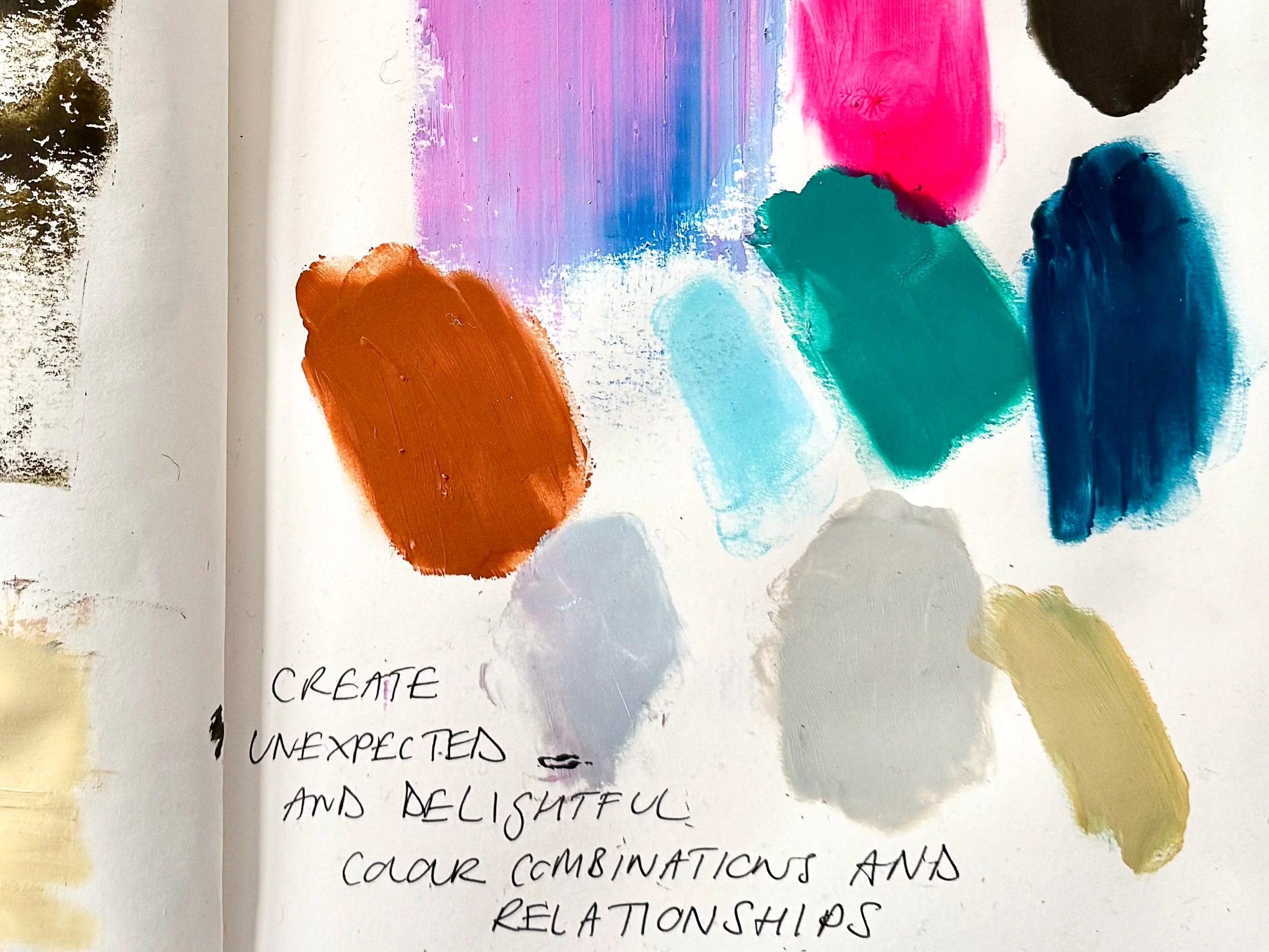
This week I’ve been trying to push myself out of my comfort zone with colour, experimenting with combinations that challenge my usual choices. Giving myself small creative problems I don’t yet know how to solve to help me to stay engaged and curious.

Seeing what’s on the other side of familiar. Seeking the treasure Joseph Campbell refers to. Working with new colours I don’t normally choose keeps my practice fresh and offers a little creative tension to wrestle through. Growth and discoveries often come from these moments of discomfort.

Two works in progress…

Creative discomfort

Introducing something new, or challenging or different and doing things in our art practice that we don’t usually do is energising.
It is a little uncomfortable and a little exciting.


Creative discomfort can often lead to breakthroughs and discoveries, so sometimes it’s good to actively welcome it in, go do something you don’t usually do and see where it takes you…


Materials

Some of these links are affiliate links, if you buy something through them, I might earn a small commission, at no extra cost to you. I only ever share the products that I actually use. 


Read More
Helen Wells Helen Wells

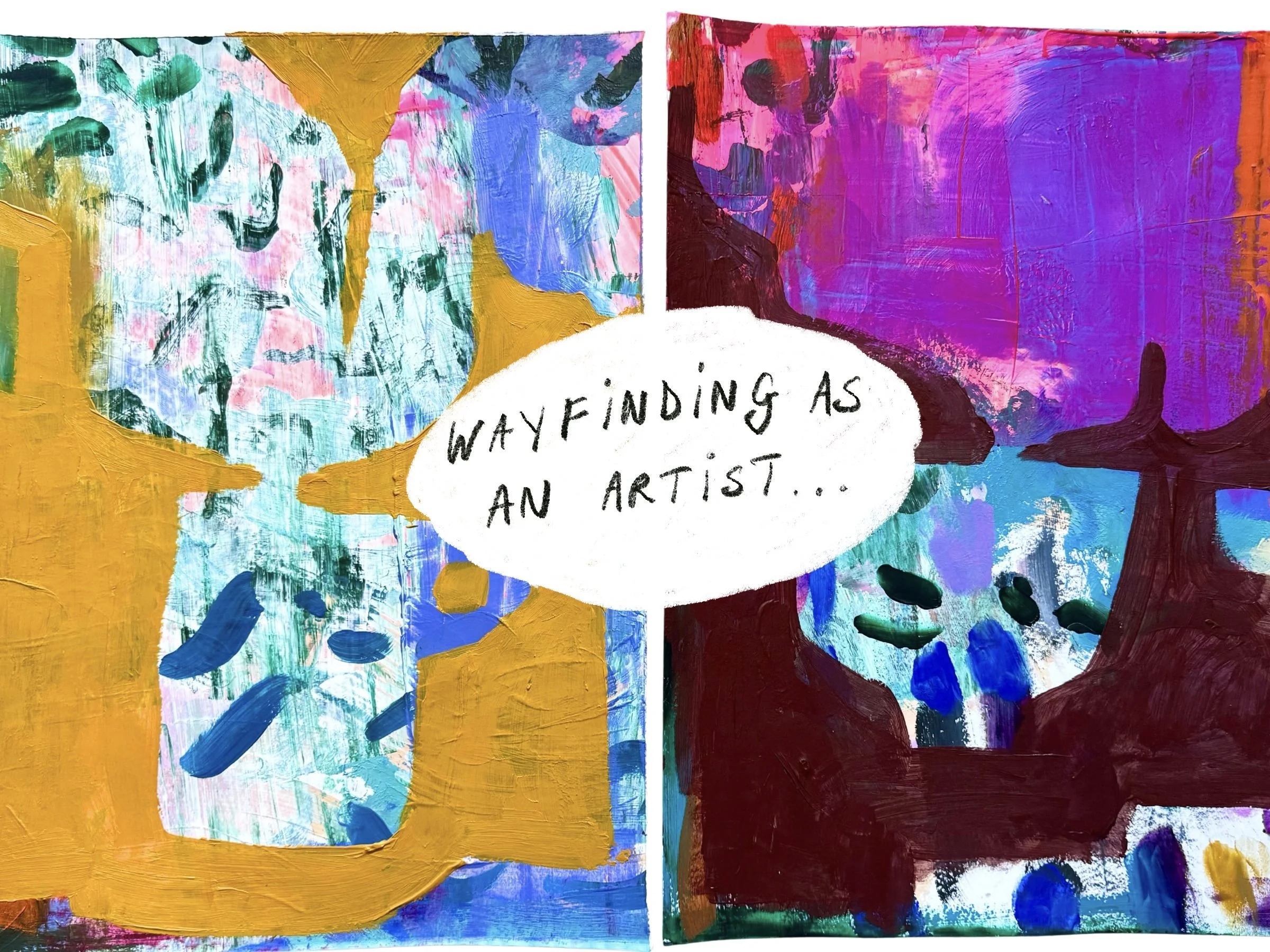
Wayfinding as an artist

Way-finding is the perfect analogy for my kind of art making…

I’ve been reading about the human art of wayfinding. How we find our way in the world.

Before maps and machines we learned to navigate our world by noticing. We paid close attention to our instincts. We remembered routes by experience. We found our way by moving through the landscape and being curious, interested, adventurous, attentive.

Wayfinding is part of what makes us human. It is rooted in observation, memory and trust in our ability to figure things out as we go. To get lost and then get ourselves back on the right path or track.

Wayfinding is the perfect analogy for my kind of art making. There is a need to get comfortable with not knowing where I am heading and trusting I can get myself there anyway.


Right now, I’m finding my way through. I am making lots of things. Small studies. A series of creative experiments that are starting to feel like they’re pointing me somewhere interesting, I’m not quite sure where yet.

I’m learning to trust that the clues are already there, embedded in the work. That if I keep making and keep paying attention to what I’m drawn to, the subjects, the shapes, the themes, the colours, the motifs, the marks… they’re saying something, leading me somewhere. I just need to listen to what it is and follow the signs.


It feels like I’m wandering and wondering. Letting ideas evolve and build. Not needing to have a clear sense of direction, yet. Noticing. Following the trail. And allowing whatever it is that wants to emerge to take its time.


I used to find this part extremely hard, the not knowing bit can be uncomfortable. The unfinished-ness of it all. But I’m starting to understand that this is the work. The being in the midst of it all. The being attentive. The making without needing to define or explain or get it right.


Like wayfinding, art-making is its own kind of navigation. Feeling your way forward, marking your own trail, learning the landscape by being in it, up close. With your hands and heart in the process.


So that’s where I am. A little unclear of where this work is heading. A little unfinished. But enjoying the discovery. And trusting that I can figure it out ‘en route’ (on the way)…


PS: If you’re wanting to sharpen your own creative instincts and use the objects in your home to inspire a body of mixed media art you may like my course The Still Life Lab

Read More
Helen Wells Helen Wells

Finding inspiration in our everyday lives

Still Life, sketchbooks and the ordinary things that matter

Music Credit: Mountains by The Eastern Plain

Reflecting on the ‘why’ of our art is such an interesting and enlightening exercise. Why do we create what we create? Why are we drawn to certain subjects or approaches?

Vases, vessels, cups and mugs have always fascinated me. Small intimate, domestic objects of beauty. My parents had a love of ceramics and vases, I inherited many of them when they died. And I think that’s part of why I’m still drawn to them now.


They feel symbolic, a container of life, an emptiness ready to be filled… They hold memory, usefulness, beauty. Often handmade and handheld. A moment of decorative delight. Always purposeful. A small reminder that ordinary objects can carry deep meaning.

Draw what is there…

Lately, life’s been a bit busy. And often when I feel like this, I try and make making art easy for myself. The way I like to nurture my creativity is to draw what is already around me or to use what I already have. 
A favourite cup. A jug on the shelf. An interesting house plant. Things that feel familiar.
Reassuring.
 Part of my day to day life. The things that are right there in front of me.

Still life drawing has become a kind of small ritual to literally and metaphorically still my life.
 To slow me down enough to re-connect back to my self, reconnect back to my sense of home, my sense of psychological safety. A way of grounding myself in the here and now. 
A way of making something without needing it to be extraordinary.

The art of noticing

You don’t need a big idea to make a drawing.
 Sometimes, what you need is already in front of you. Still life observations and drawings help me to pay attention to shape and shadow,
 to pattern and line,
to the relationship I have with the objects in my home.

Drawing is a way to connect to my belongings,
to cherish what’s familiar, to remember that even the smallest things can hold meaning and beauty….

Perfectly imperfect

None of the drawings in my sketchbook are polished.
 Most of them are full of searching lines. Some feel clumsy. 
They contain finger prints and smudges. But that’s the magic of it. We don’t need perfect subjects or perfect pages. Sometimes we just need a pencil and a bit of time. And something ordinary to connect with.

Materials

In this video I was drawing in my sketchbook with a 14B pencil :

The pencil I was using was a Faber Castell Pitt Pencil Matt Graphite Pencil 14B

The large sketchbook is A3 in size (a double page spread is A2). Ebony Hardback Sketchbook, Portrait Orientation, A3 Size by Daler Rowney

These links are affiliate links, if you buy something through them, I might earn a small commission, at no extra cost to you. I only ever share the products that I actually use.

PS: If you’re wanting to develop your own experimental approach to Still Life inspired art you may like my course The Still Life Lab

Read More