
How I became an artist and the advice I might give others:
I became an artist a little later in life, in my late thirties. I didn’t go to art collage and gave up studying art when I was just seventeen. My route to becoming a full time artist has been a rather circuitous one. I didn’t create anything at all in my twenties, then spent my thirties obsessed with art, but only ever as a hobby. It wasn’t until my forties that art slowly evolved to become my full time career.
As a child, I was always drawing. I dreamed of being a textile designer. I loved spending hours creating elaborate and intricate patterns from my imagination. I used to get through so much paper that my father started to buy me large rolls of wallpaper lining-paper to keep up with my insatiable demand for something to draw on.

Acrylic on board
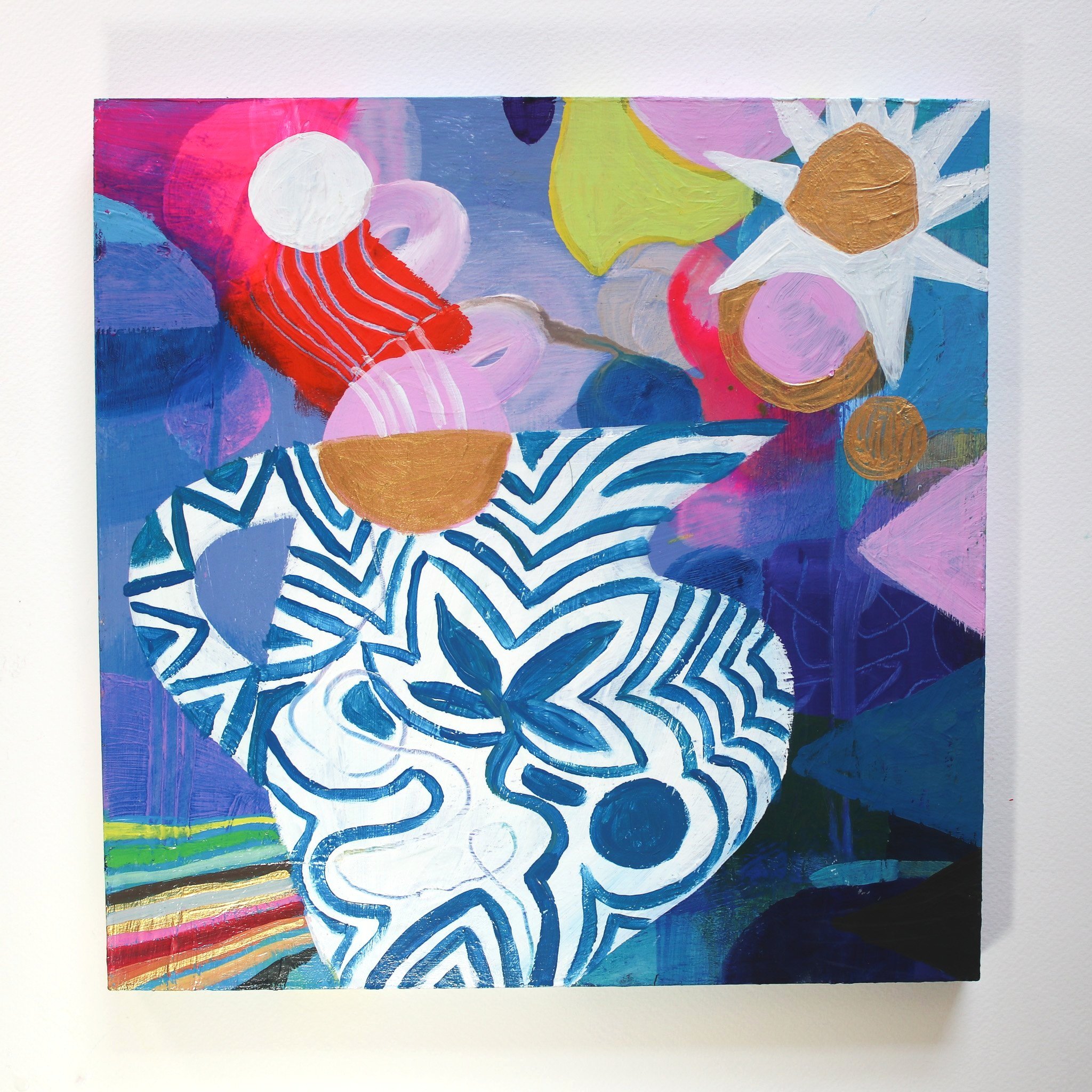
Recent art work
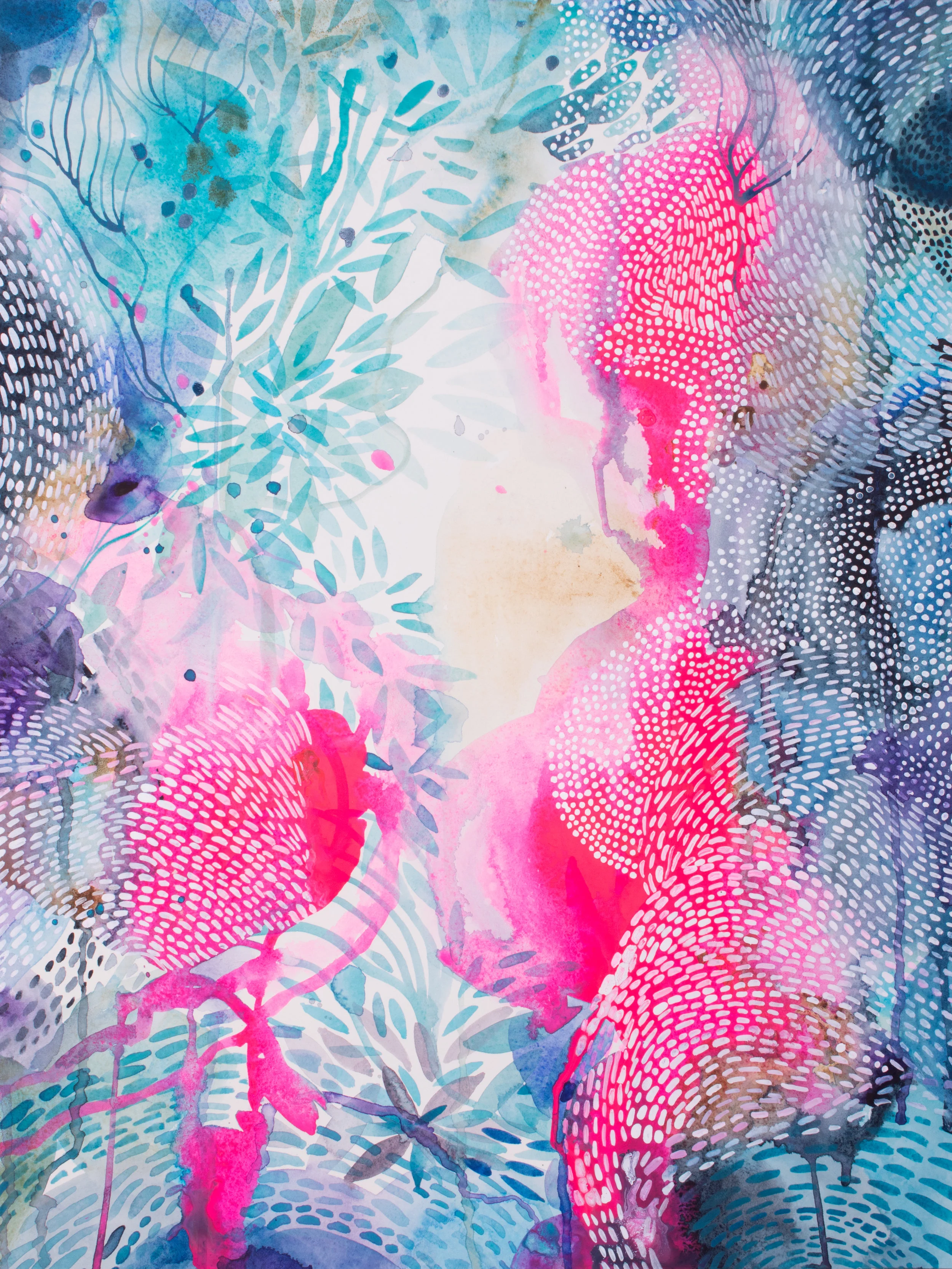

Drawing from 40 + years ago
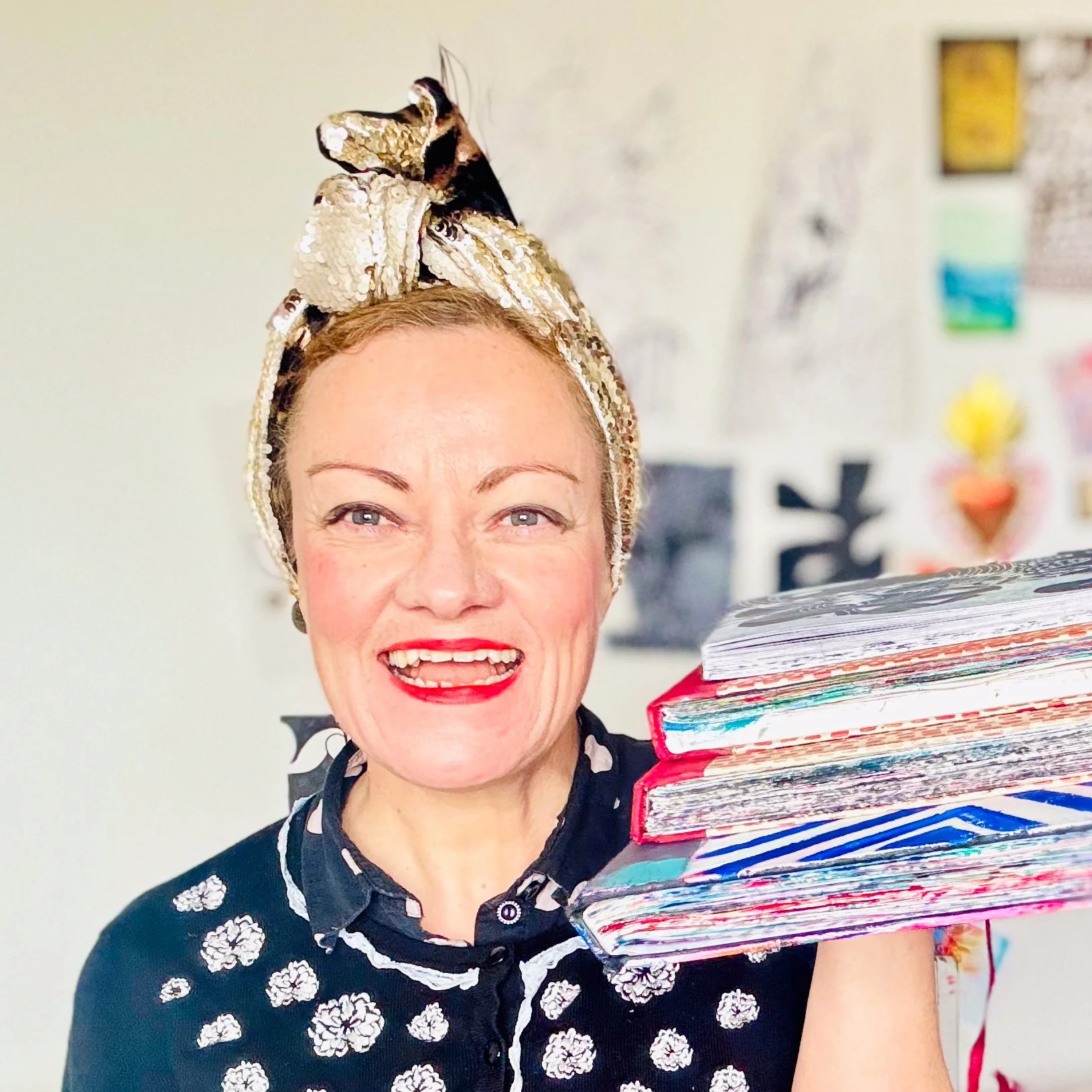
My Mum was studying contemporary textiles when I was little, so she was always sewing or taking me to the haberdashery. Thread, fabric, colour, pattern were the back-drop to my childhood. I have always been fascinated by pattern and colour
But then at seventeen when a school time-tabling clash wouldn’t allow me to study art with my other subjects, I gave up studying art and I gave up creating art and I allowed it to just slip out of my life.
A little bit of heartbreak brought me back to art making. A relationship breakup when I was 28 or 29 left me moping around with no summer holiday plans. I decided to book myself onto a two week painting summer school at a London art college. It was there that I started a much more fulfilling love affair… I fell completely and utterly in love with drawing and painting.
For nearly all of my thirties art was a hobby, I tried to go to art collage and was rejected after a terrible interview, so I just thought that creating art would remain a life enhancing, life enriching hobby.
In my late thirties as I climbed the career ladder at the charity I had worked at for for nearly a decade, I began to feel that perhaps I had laid my ladder against the wrong wall.
I had a clear epiphany out of the blue one day, that I really did want to make art a more significant part of my life… so I set about trying to make art my career.
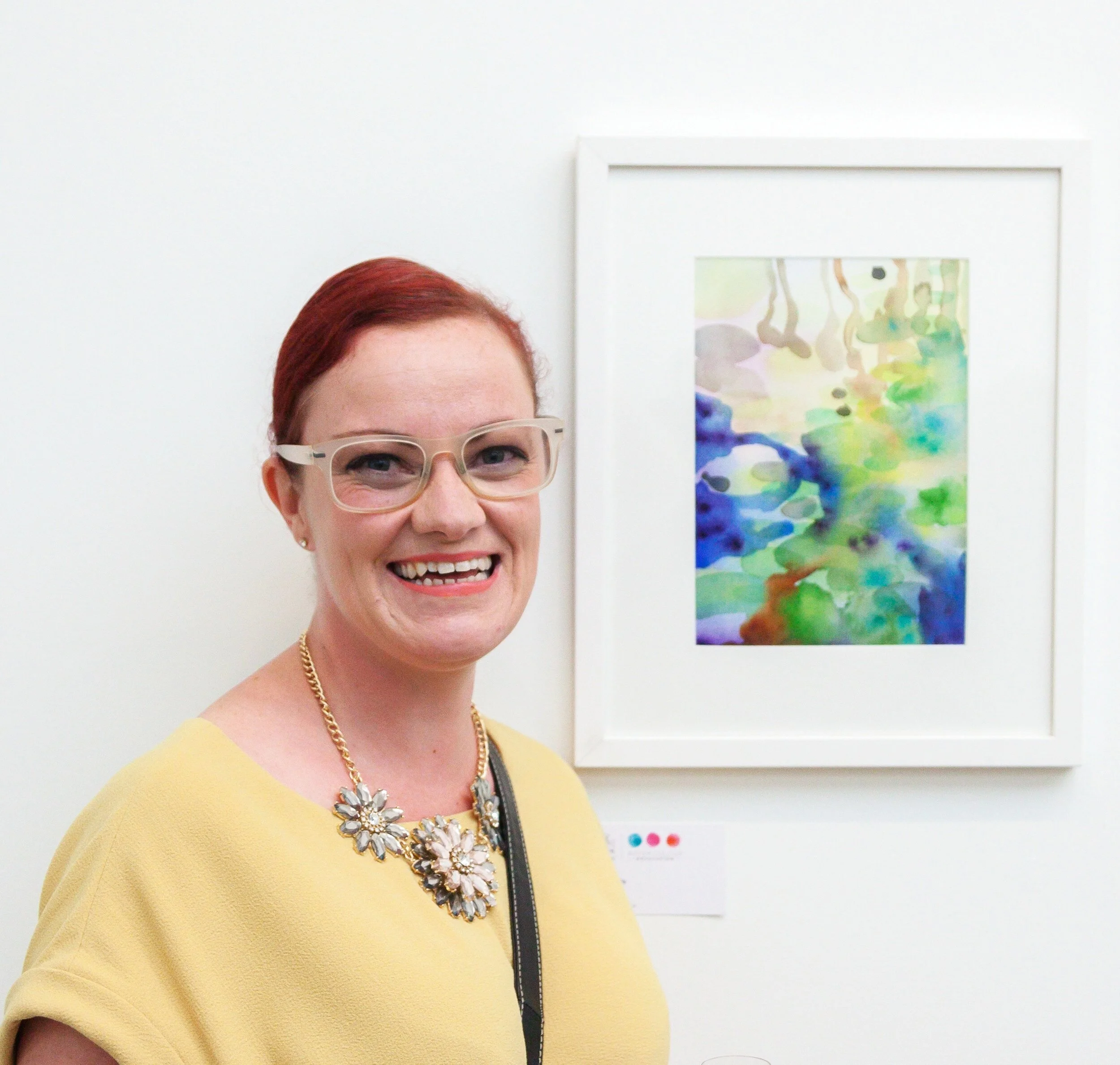
Saatchi Gallery London 2014
I took tiny steps in the right direction. I started to try and sell my art online. I entered competitions and group shows and slowly and surely things started to happen. I won a Winsor & Newton watercolour competition which meant my art was displayed at The Saatchi Gallery in London. Eight of my paintings were displayed at one of Gordon Ramsay’s restaurants… I build my confidence, learnt new skills and made art my part time career and then eventually my full time career.

Sketchbook pages

Sketchbook pages
I’ve now patch-worked an art career together through trial and error, finding out what works and what I enjoy. I love the career I have built. I license my work for wall art, branding and products. I sell my original paintings and complete commissions for original art projects such as for hospitals. I have written a book about mixed media sketchbooks and I teach online classes.
An art career involves optimism and tenacity
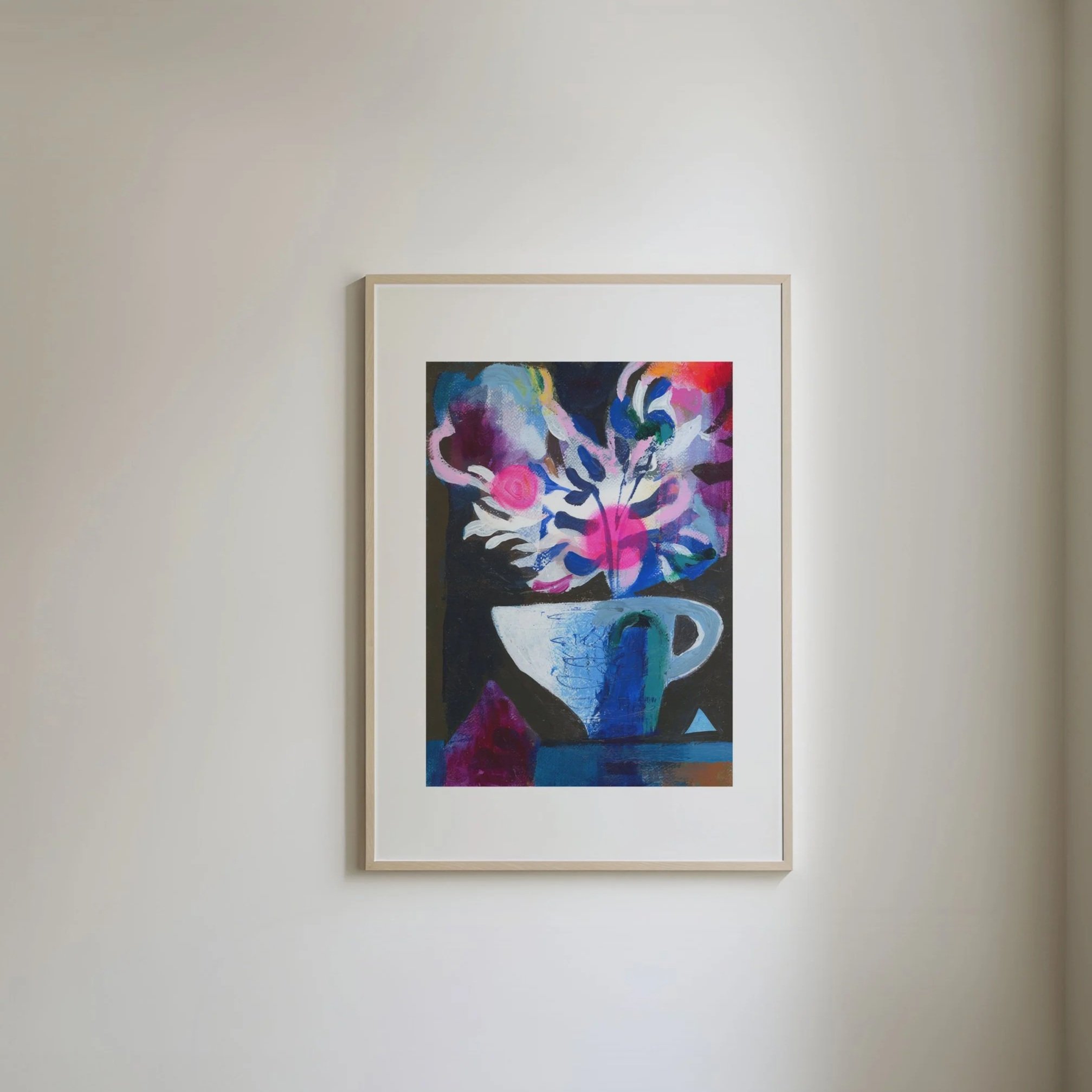
I frequently get asked by folk how they should go about making a career as an artist. It’s a valid question. I used to work in an office, and now I work for myself as an artist. So you would think I might be able to answer this question, but I can’t.
There is no easy route map or clear path through. There is no one way. There are so many ways to make money from art. I still feel like I’m just making it all up as I go along, trying things out, seeing what works, what feels good to me, what connects with people, what sells, what doesn’t…
It seems to me that working as an artist is just like the art making process itself… lots of experimentation, much trial and error, lots of practice and the need for skill development… Turning up, trying things, trying some more things and hoping that it will all turn out beautifully in the end.
For me working as an artist has demanded a high level of improvisation and a large dose of optimism. The same attitude I try to bring to the process of creating art.
Art is only part of it
The fact that art-making is my job is wonderful and yet also a challenge. It is both the most delightful job and the most demanding I’ve had. When I decided I wanted to become an artist, I hadn’t really fully comprehended that that actually meant becoming a business owner too. Making art is just a small part of what I do, not all of what I do, which seems obvious, but it wasn’t that obvious to me all all when I started.
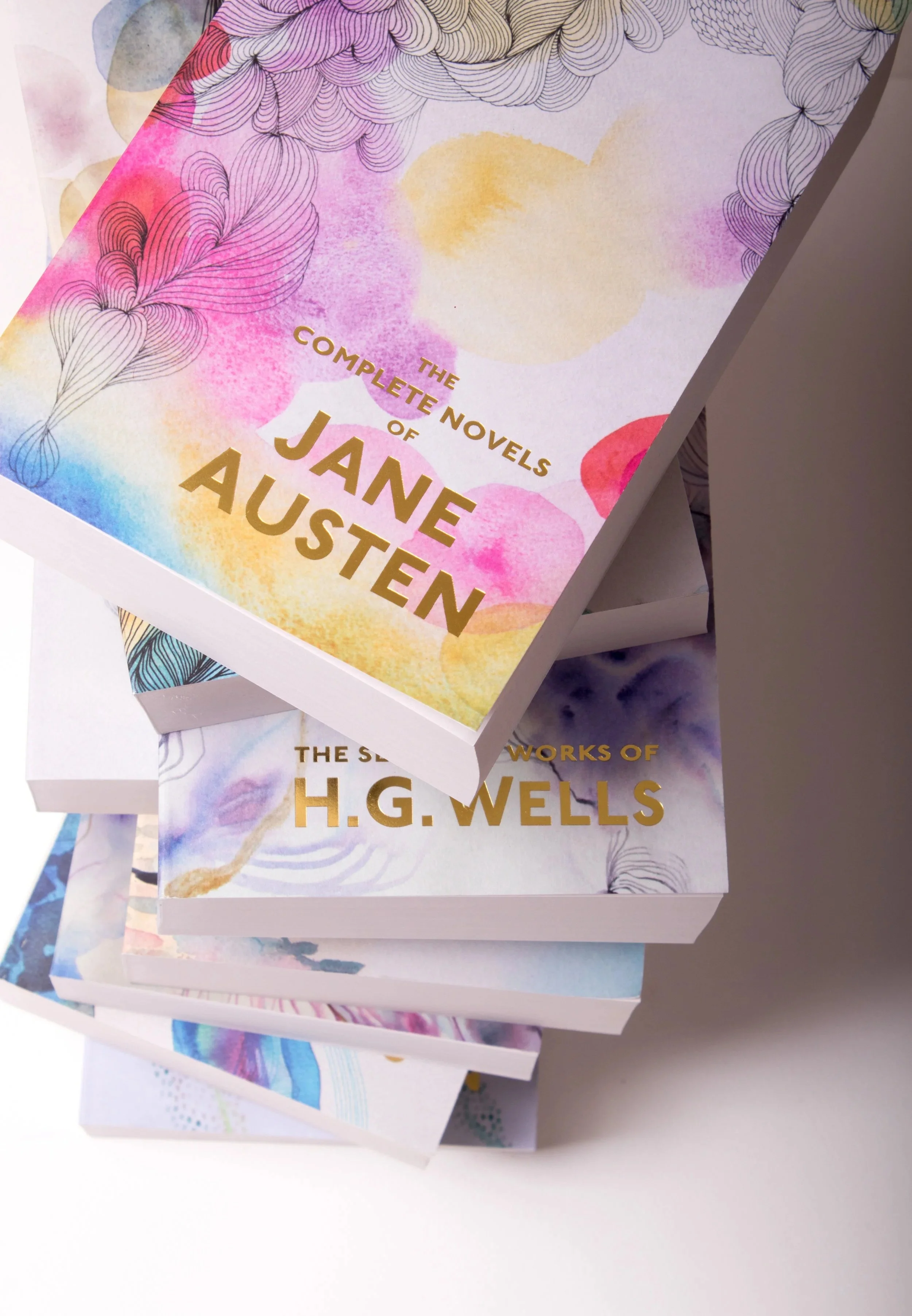
My art on book covers
While creativity, of course, always lies at the core of being an artist, developing solid business acumen has been equally important. Understanding the value of your work and learning how to effectively price it, promote it and market it. I’ve had to get to grips with all sorts of things including financial management, contracts, packing and delivery, copyright and licensing agreements, blogging, social media, websites, building an email list etc. I’m doing things that I never thought I would… like appearing on camera, or learning to edit videos. I feel like there is always more I could do and more I need to learn…and I’m fairly sure this is how I will always feel. There will never be an arrival point where I feel like I know what I’m doing. I’ve learned to become comfortable with this ambiguity.
Embracing your quirks and sensitivities
The more I make art that I love, the more my art seems to connect with people. Leaning into my own particular visual quirks and sensibilities, bringing more ‘ME’ into my art seems to have helped me along the way. It is our originality and unique perspectives that help us to stand out. Instead of trying to emulate others, we need to find and strengthen our own voice, find our own way of doing things and let our own wisdom guide our creations… We also have to have conviction in our own work, believe it is good enough, good enough to sell, good enough for people to pay money for. Cultivating this conviction is an important aspect, it is hard to sell work without it.
Perseverance and tenacity
I often think my art career has been built on perseverance as much as anything. Tenacity, dedication and discipline have helped along the way. It sounds like the opposite of creativity, it sounds deeply dull, but I believe being creative is often about continually turning up and taking small steps, being open to learning, pursuing new skills. Moments of brilliance occur because of the work, time or effort that have been put in to make them possible.
There is no one way to be an artist
When I first started working as an artist I thought it was just about selling paintings. I soon worked out that I would find it very hard to sustain myself via the income I generate from just selling original paintings alone. It is of course possible and many people do, but for me I’d either have to create at a much faster rate than felt desirable or sell my originals for a much higher price. Neither of those felt right for me, so I needed another solution.
When I first started working as an artist and actually for many years after, I kept a part time job doing something else or I took on freelance projects.
The part time job is long gone and art based activity is now my only source of income, but I do still patchwork it together from various places. I license my art, I take on commercial commissions, I sell original paintings, I do special projects such as writing my book, for which I received a one-off fee and I teach online art classes.
Every artist I know has a different way of patch-working an income together. Some work with a gallery, or sell via art fairs, some sell prints, or merchandise, some do collaborations or partnerships, some run retreats or in person classes, some receive bursaries or grants, some work on public art projects or any combination of these. Each artist has to find their own sweet spot, balancing what they enjoy, how they want their working life to be and what makes enough money to sustain them.
Failure is information
Failure, in one way or another, is an inevitable part of an artist's journey. Paintings don’t work, ideas don’t land, things you think are brilliant don’t sell… Failure is perhaps not the right word for it though, because if something has been learned through the doing, was it really a failure? There is always something to discover. We sometimes have to embrace these ‘failures’ as a stepping stone, rather than a roadblock. Acknowledge them, feel the upset, lick your wounds and then dissect them, and derive lessons from them. Setbacks sometimes provide us with a new path forward.
Define your own success
Learning is life-long. I try to stay curious, explore diverse art forms and mediums, seek inspiration from various sources and recommend this for others too. Immerse yourself in museums, galleries, books, or online resources, try and expand your artistic horizons. Being a professional artist is a challenging yet hugely enriching endeavour. One where you need to be true to yourself, embrace the mistakes and miss-steps, and remember that success is not really ever a destination that you arrive at; success can be found in the daily pursuit of a life lived with purpose, expression and meaning.