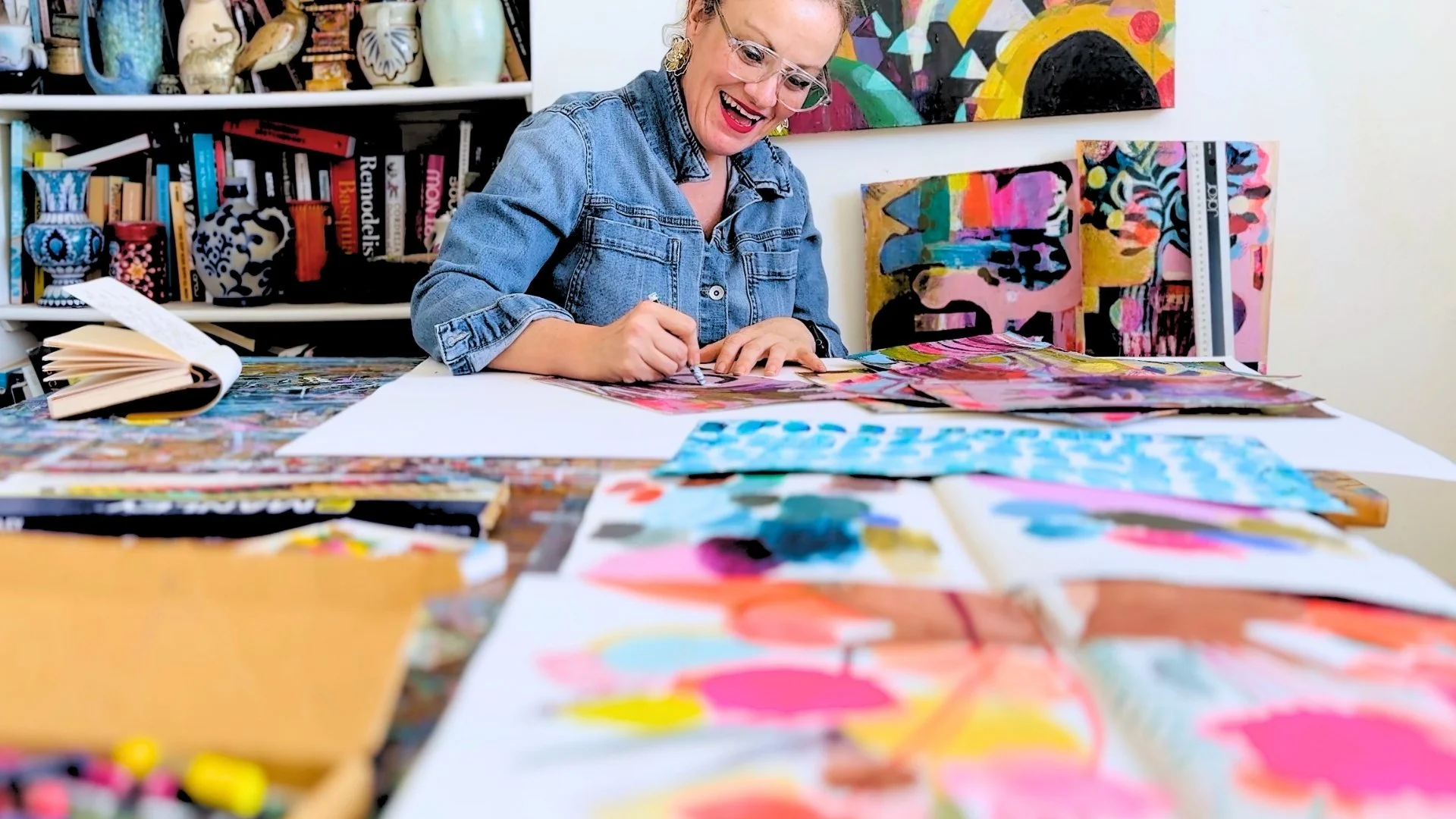
Video about not rushing the creative process
There is often a time in my art making cycle where I have no idea about what comes next. One creative preoccupation has come to completion and the next hasn’t quite revealed itself yet.
I used to consider this to be a gap in-between things. I now understand that it isn’t really a gap at all, it is an integral part of the creative path.
No need to hurry
My instinct is still to hurry through it, to find the next idea, fascination or project and get on with making the things, but I now try and remind myself that there is nothing to hurry through.
My creativity does not move at a consistent pace and I should not expect it to.
Searching and seeking
Sometimes I am completely absorbed in an idea and know exactly what I want to make. One thing leads naturally to another and there is a lovely sense of momentum, progression and abundance of output.
And sometimes if feels more like I am scrabbling around in the dust trying to find buried treasure. There is a sense of searching and sifting.
Gathering threads
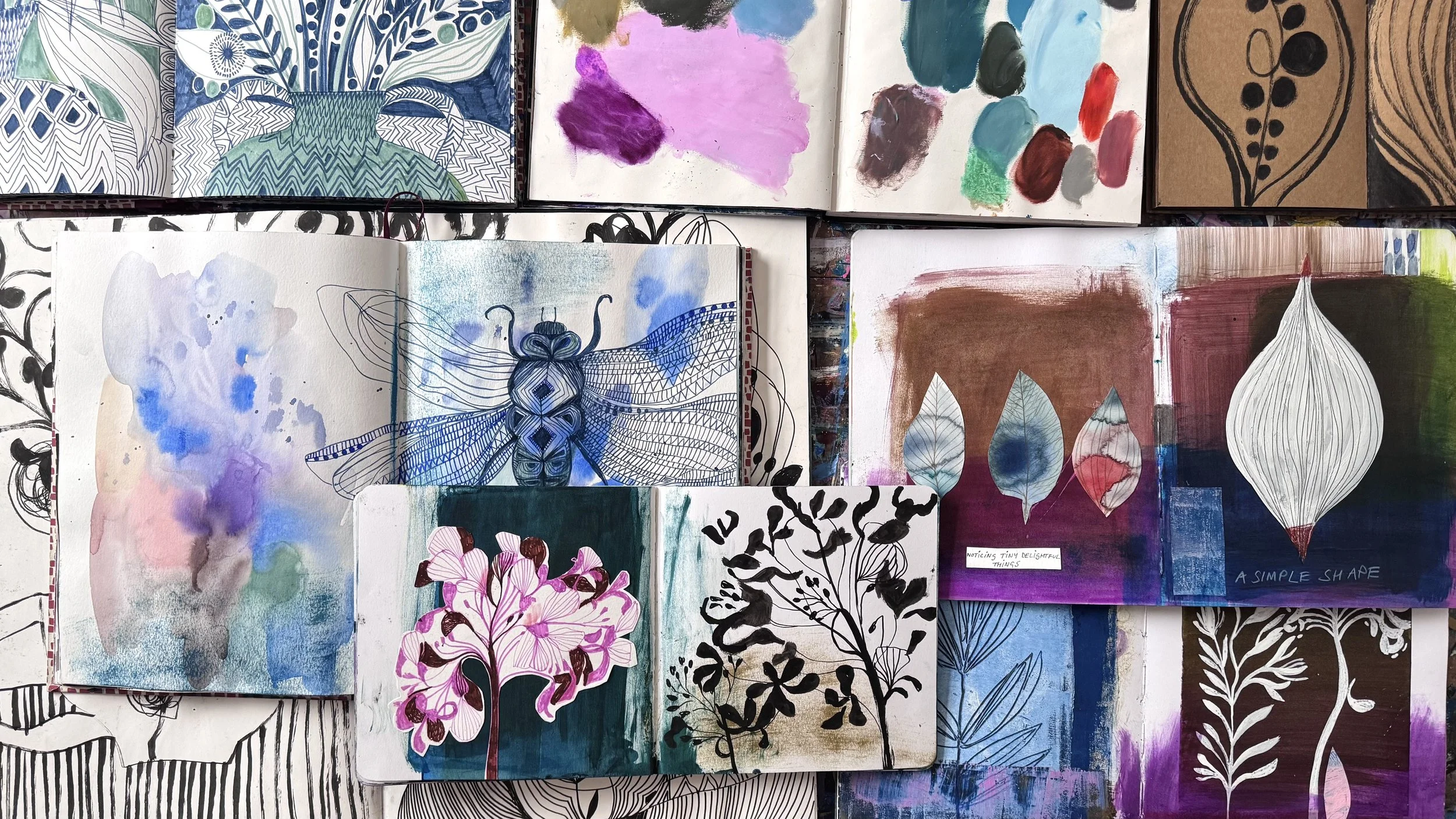
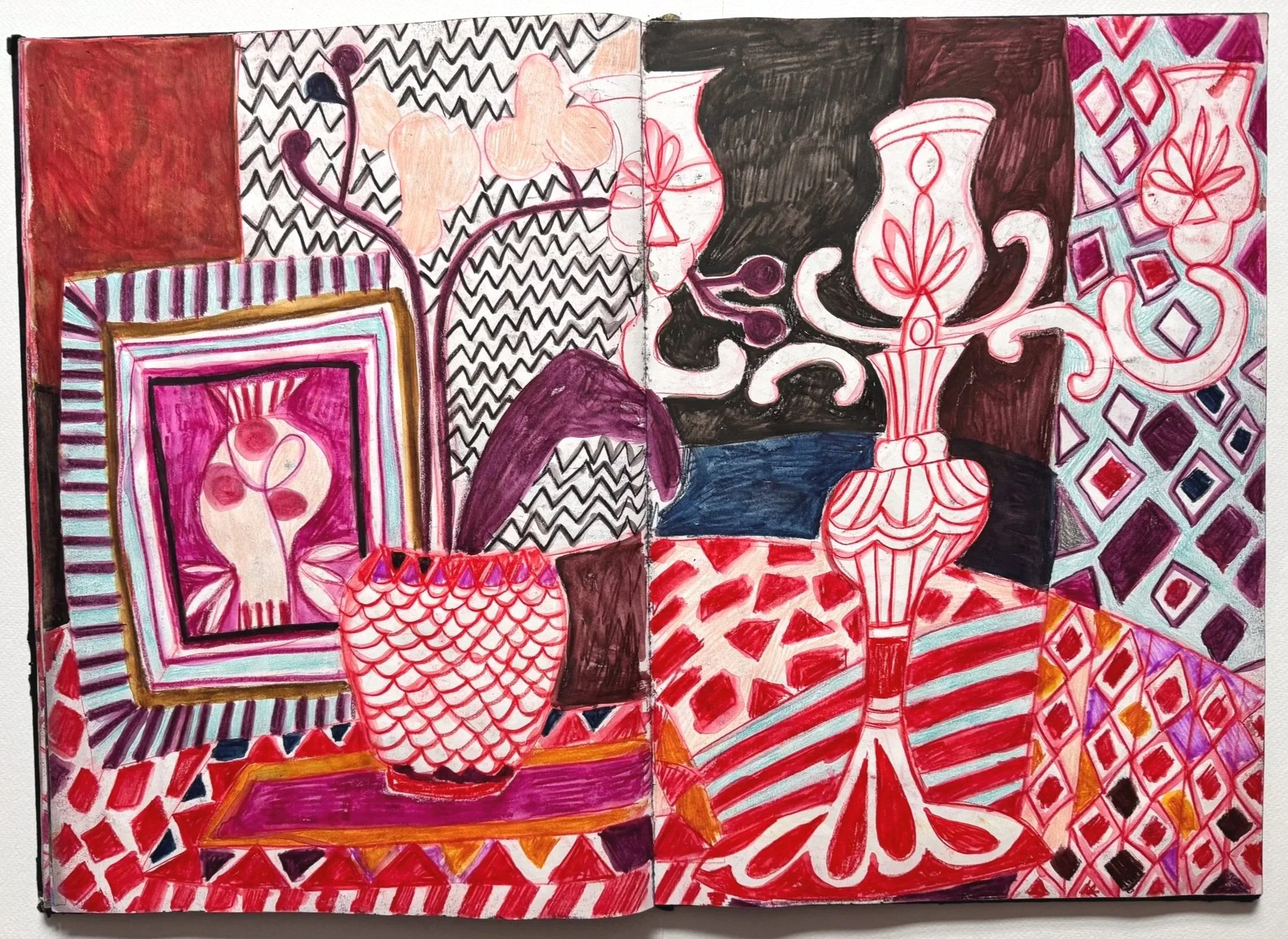
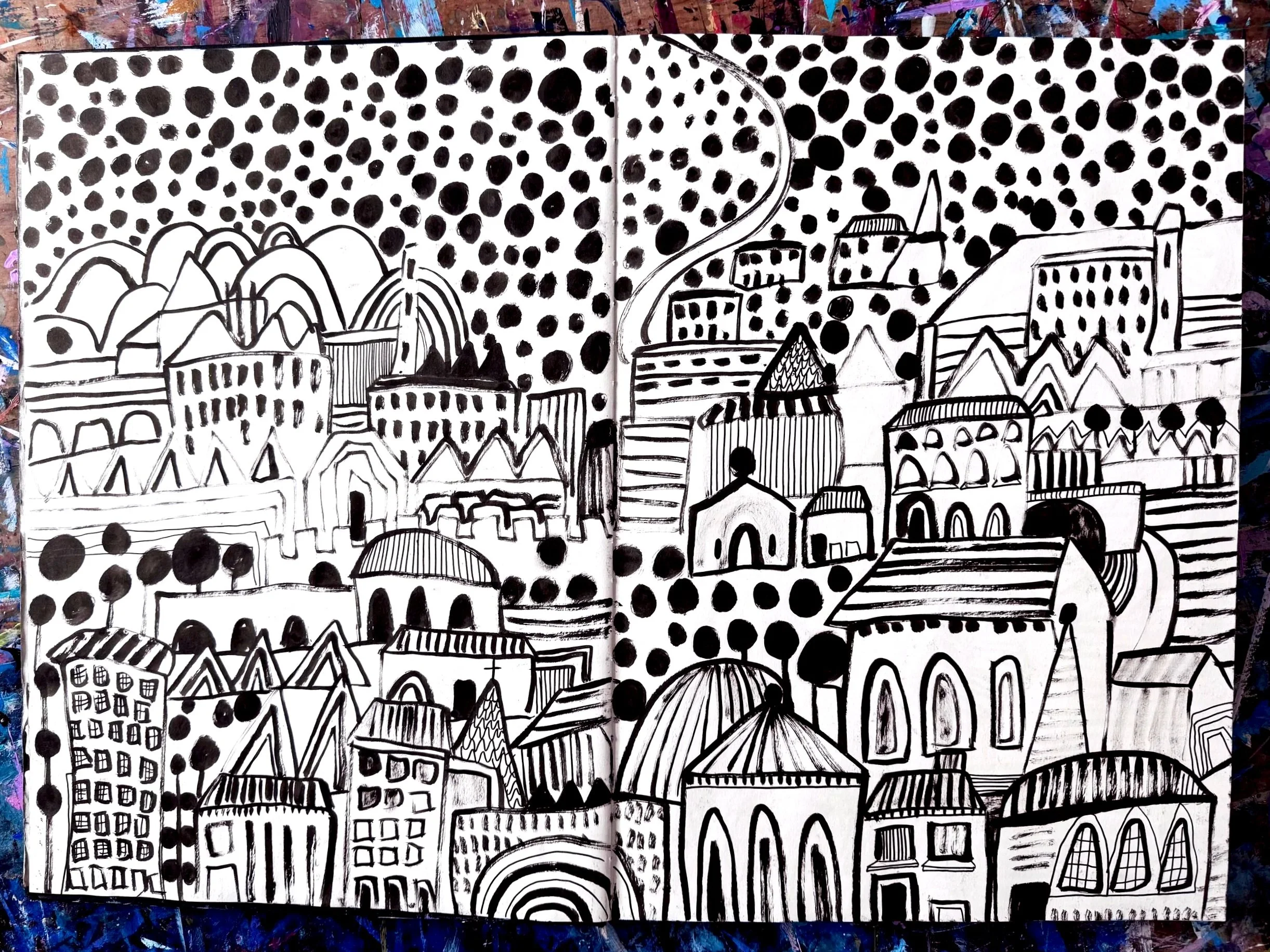
These are the times when I tend to spend longer in my sketchbooks, look back through things I have already made and pull art books from the shelves. I might make small drawings or experiment with techniques without knowing whether they will become anything. I notice what catches my attention and what I keep circling around. I go for walks and allow myself time to think.
Productivity trap
My default response to these periods can sometimes be “why am I being so unproductive”. I have to catch myself when I think like this, it is an old and familiar record that can play loudly if I let it.
I know that the harvest only comes from the seeds that are planted.
Creativity doesn’t always require effort and endeavour. Sometimes in needs space. During these less productive periods, I might be gathering, experimenting, looking and thinking. Quite a lot of the time I’m simply faffing around.
All of these things can belong to an art practice. Making finished work is only one part of it, tending to our creativity is another part of it.
A little negative space
In art, the space around and between things is part of the composition, and I want to think about my art practice in the same way.
These days, I try and invite in spaciousness quite deliberately. Sometimes what I need is an afternoon drawing in my sketchbook without expecting anything significant to come from it. Other times I might spend an hour looking at art books, clearing the clutter from my desk, or going for a walk along the beach.
A time for gathering
At the moment, this is what I am doing. I have been looking through old sketchbooks and studio notebooks and revisiting artists whose work I am drawn to. I’ve been paying attention to what interests me without feeling any great urgency to decide what to do with it all.
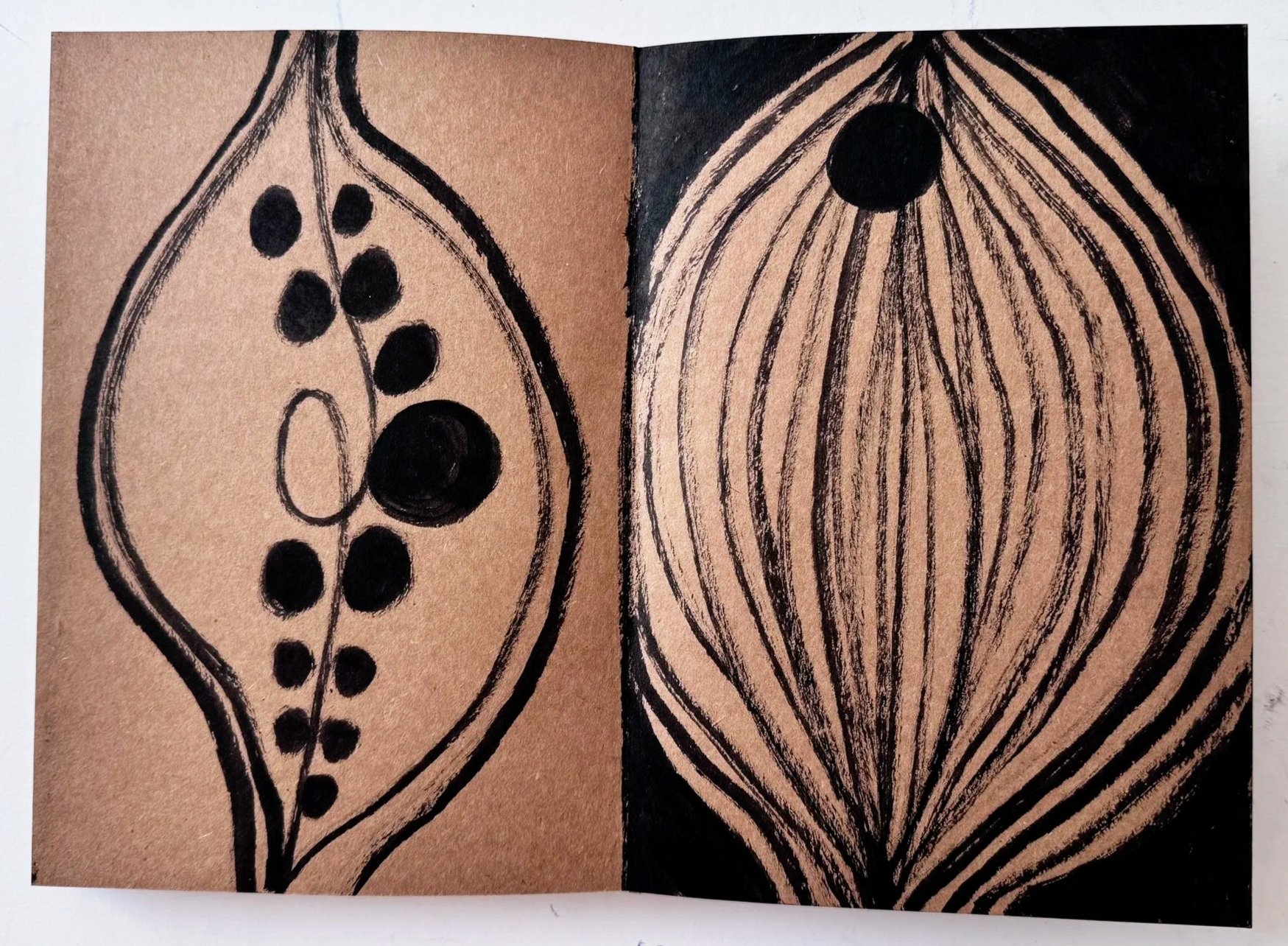
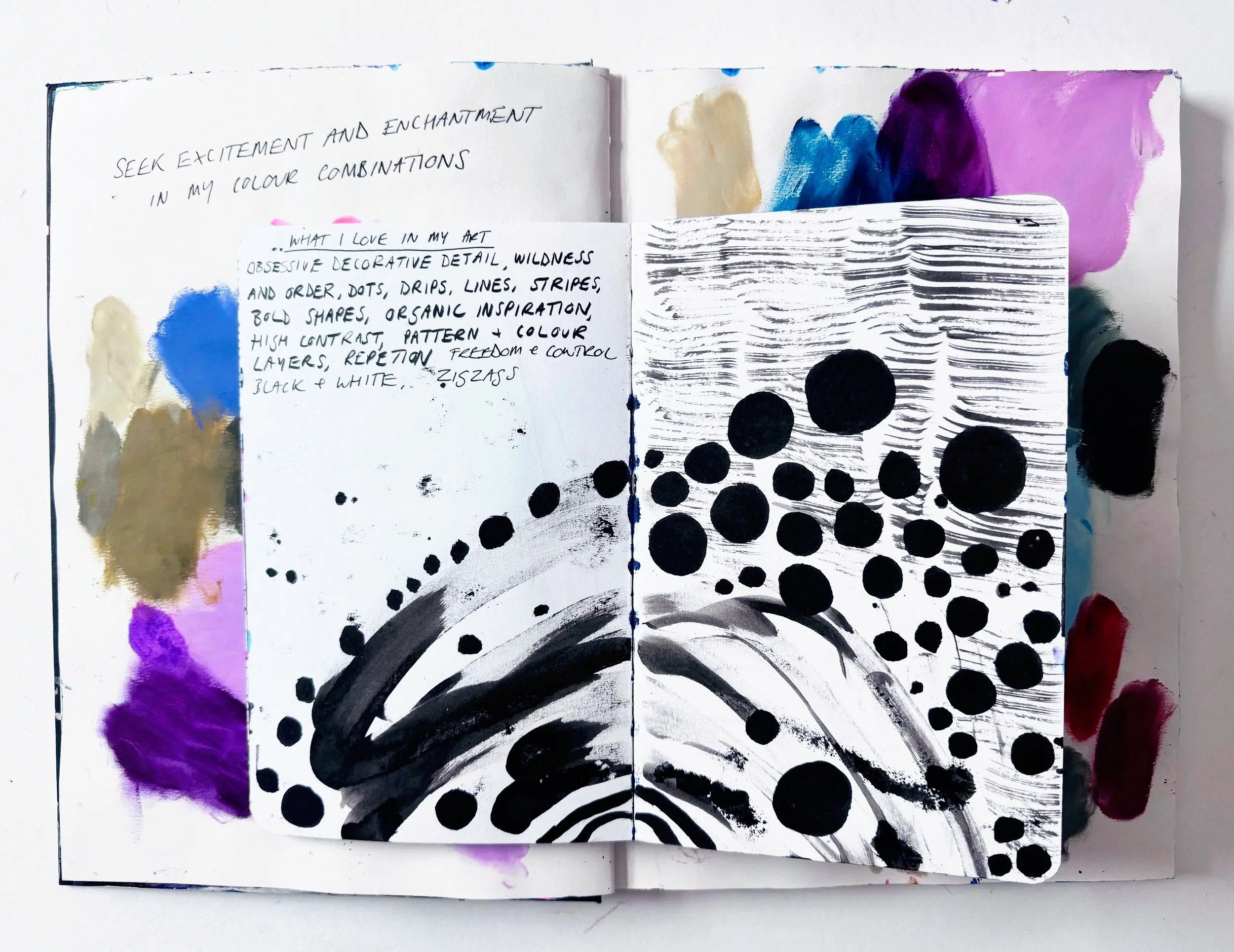
This is where sketchbooks become particularly useful to me because they contain a record of what has already caught my attention. When I look back through them, I notice recurring ideas.
The beginnings of the next body of work probably already exist in fragments, in what I have already created.
Allowing things to take their time
I know from experience that another period of focus will come. Something just around the corner will interest me enough that I want to pursue it deeply, and the gathering will give way to making decisions, developing ideas and becoming thoroughly preoccupied with something again…
Books and links
Hundertwasser by Harry Rand, Published by Taschen in 1991. See more of the artist’s work here:
https://hundertwasser.com/en/art/paintings
Barbara Rae by Duncan Macmillian, Robin McKie and Imogen Stevens. Published by The Royal Academy of Arts in 2025. You can see more of Barbara Rae’s work on her website here:
https://barbararae.com/paintings
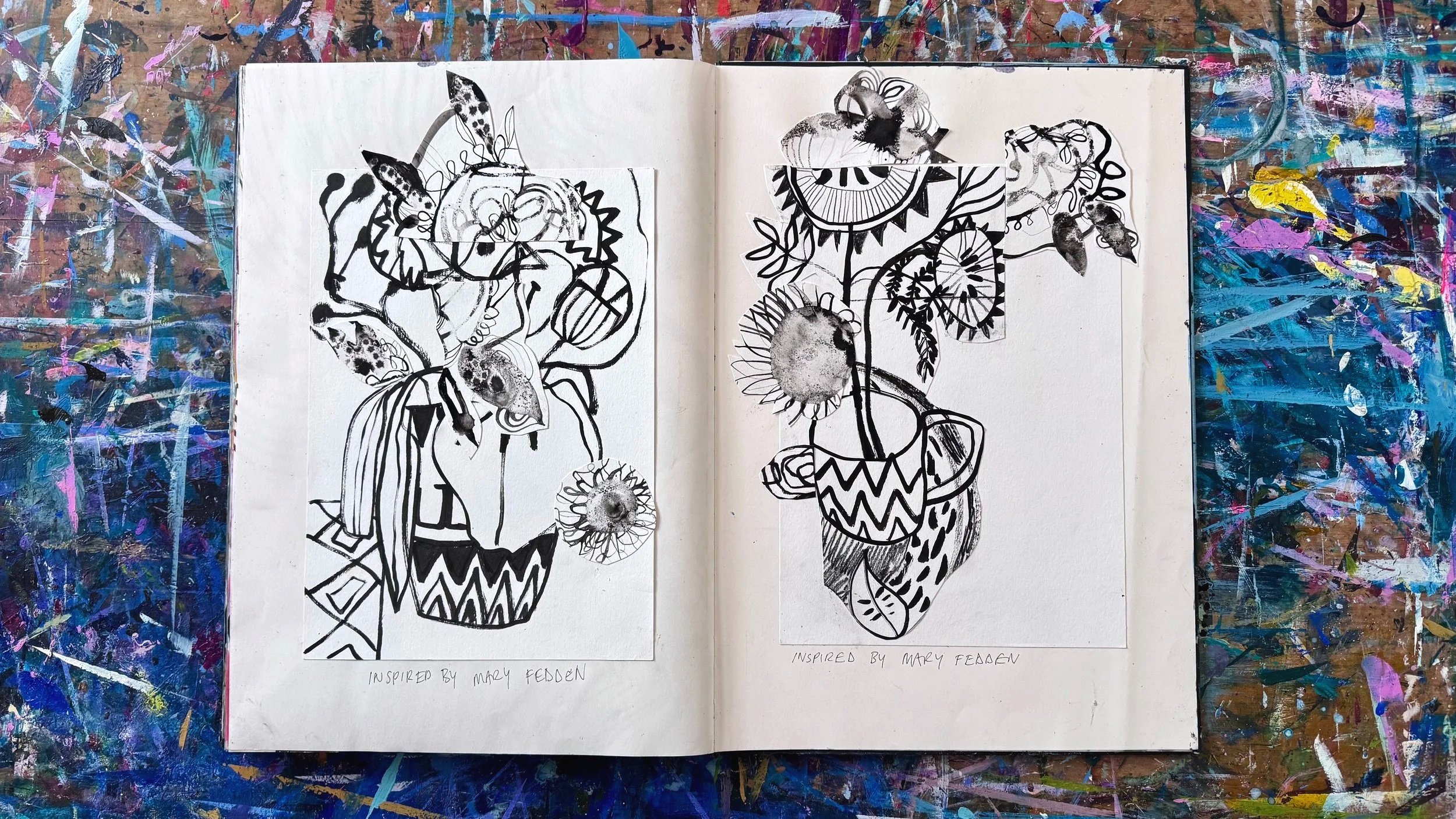
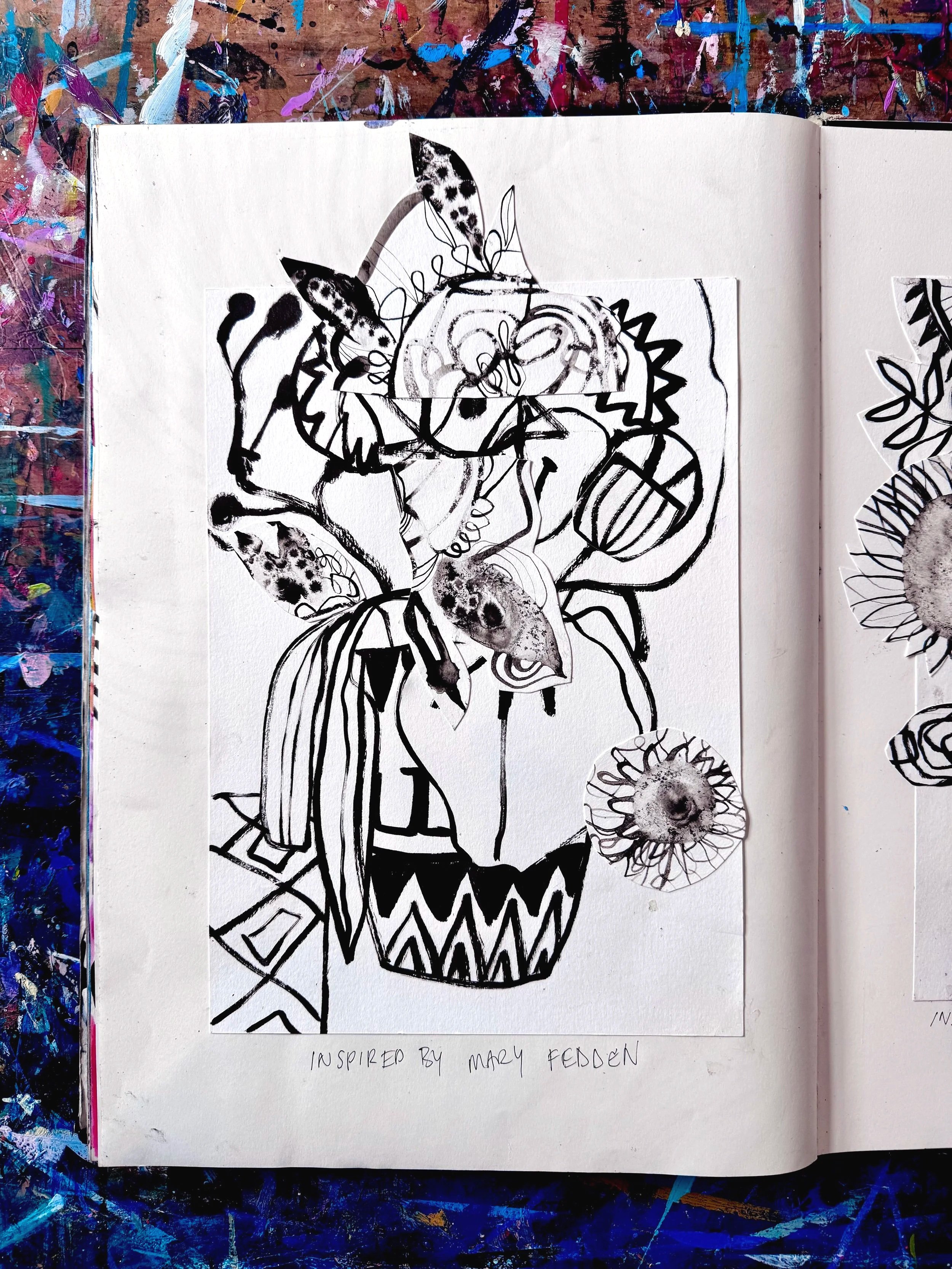
Mary Fedden: Enigmas and Variations by Christopher Andreae. Published by Lund Humphries Publishers in 2007.
You can see more of her work on the ARTUK website
Types of sketchbook
Here are some of the sketchbooks I like, but sketchbooks are a personal preference and come in so many different shapes, sizes and varieties, the sketchbook that is right for me, may not be right for you. The best sketchbook to use is always the one you already own.
The Venezia Book from Fabriano
Stillman & Birn, Zeta Range
The Ebony Artist Book from Daler Rowney, this is the giant A3 sized book I like to use
Dylusions Creative Journal Large from Ranger
Seawhite of Brighton Pocket Concertina
(Some of these sketchbook links are affiliate links, if you buy something through them, I might earn a small commission, at no extra cost to you. I only ever share the products that I actually use. )
More from the blog: