

Art making ideasi
Ideas. Inspiration. A little creative mischief.
If you’re drawn to abstract and semi-abstract art, sketchbooks, colour and a little creative mischief, this is your corner of the internet.
Here you’ll find stories, videos, inspiration, art making advice and gentle nudges to help you create art that feels exciting to you.

A creative refuel
Walking in nature, drawing, exploring and refuelling my creativity.
Summer always feels like a time of year when I need to refill and refuel my creativity.
A time to replenish my sense of wonder. A time to be more introspective and less productive. Our creativity can by cyclical and right now, mine is calling for spaciousness, for slowness.
In this season I try and respect this natural rhythm of mine and do things which nourish and nurture my creativity. My creative re-fuelling usually involves some mix of:
Writing and reflecting
Journaling helps me untangle thoughts and tune back in. It’s where I listen to myself. I write about what I’m drawn to, what feels exciting, what I want more of, what I want to leave behind. I ask questions I don’t always have the answers to.
Reading
When I feel creatively tired, reading feels like a nourishing reset. I often turn to books about art or creativity, or stories that take me somewhere unexpected. Sometimes reading about how others see the world helps me better understand how I see it too.
Looking at art
Visiting galleries, paging through art books, sitting with a painting in real life, all of it feeds something in me. Just looking, noticing, feeling what stirs and connects.
Learning
I take classes often, because I love to be reminded that there are always new ways to see and new things to try. I love how even one new idea or tool can unlock something unexpected. It’s often less about mastering a technique and more about opening a new door.
Time in nature and walking in new places
A slow walk, for me is often a return to wonder.. Letting myself follow what I notice: the shape of a shadow, the texture of a wall, a tangle of leaves. Just letting myself be surprised. Letting myself be fed by the beauty of the natural world.
Playing about
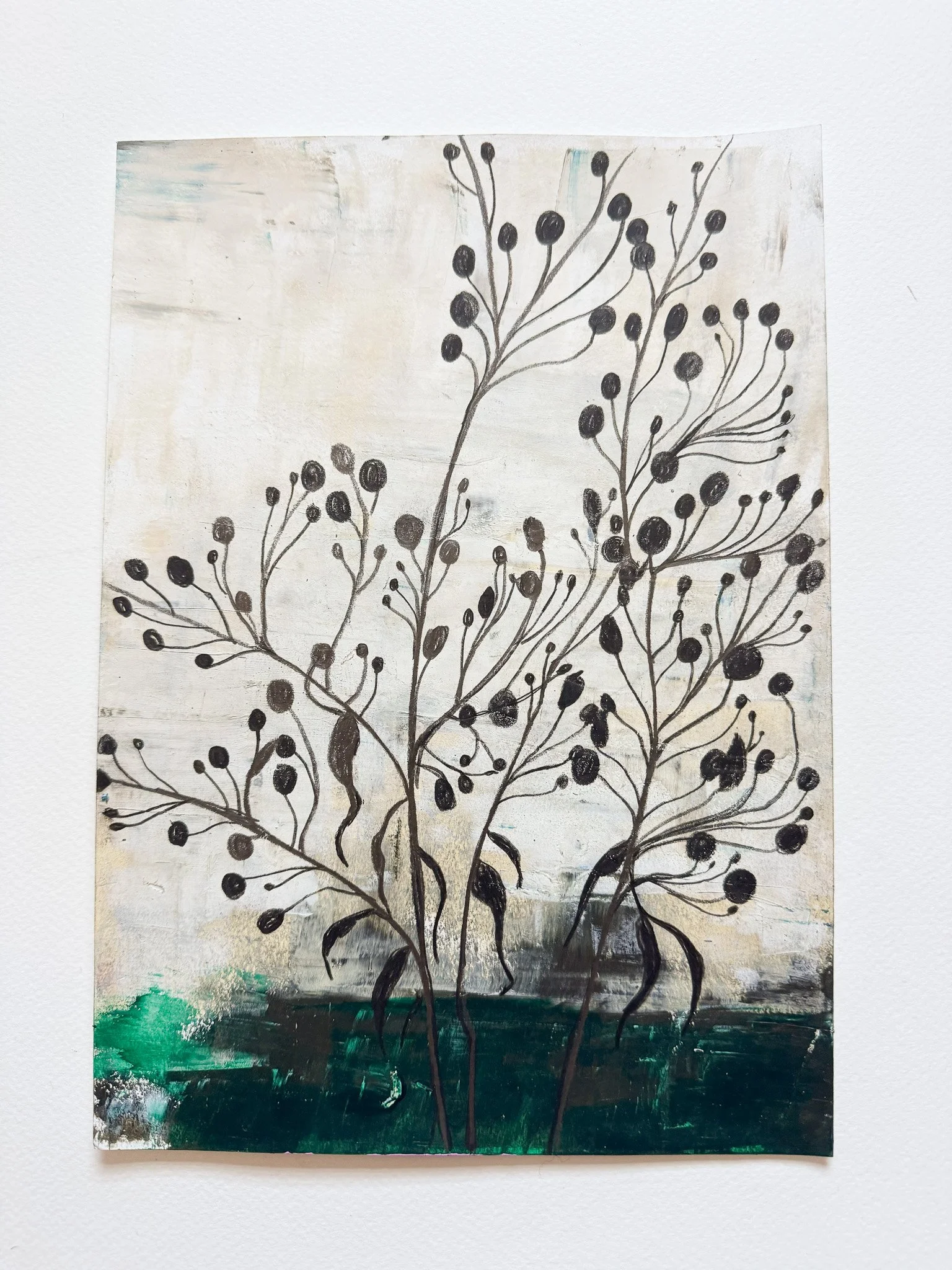
Some days I get out materials and just play. No plan, no pressure. I remind myself that this doesn’t have to be anything. It doesn’t have to lead to anything. It can just feel good. It can just be weird and messy and mine. And paradoxically ithis energy and attitude does often lead me somewhere interesting.
More drawing as exploring
Drawing slows me down. It helps me pay attention to the page, to the world, to myself. It’s a way of discovering, embedding an experience in your psyche, connecting head, hand and heart…
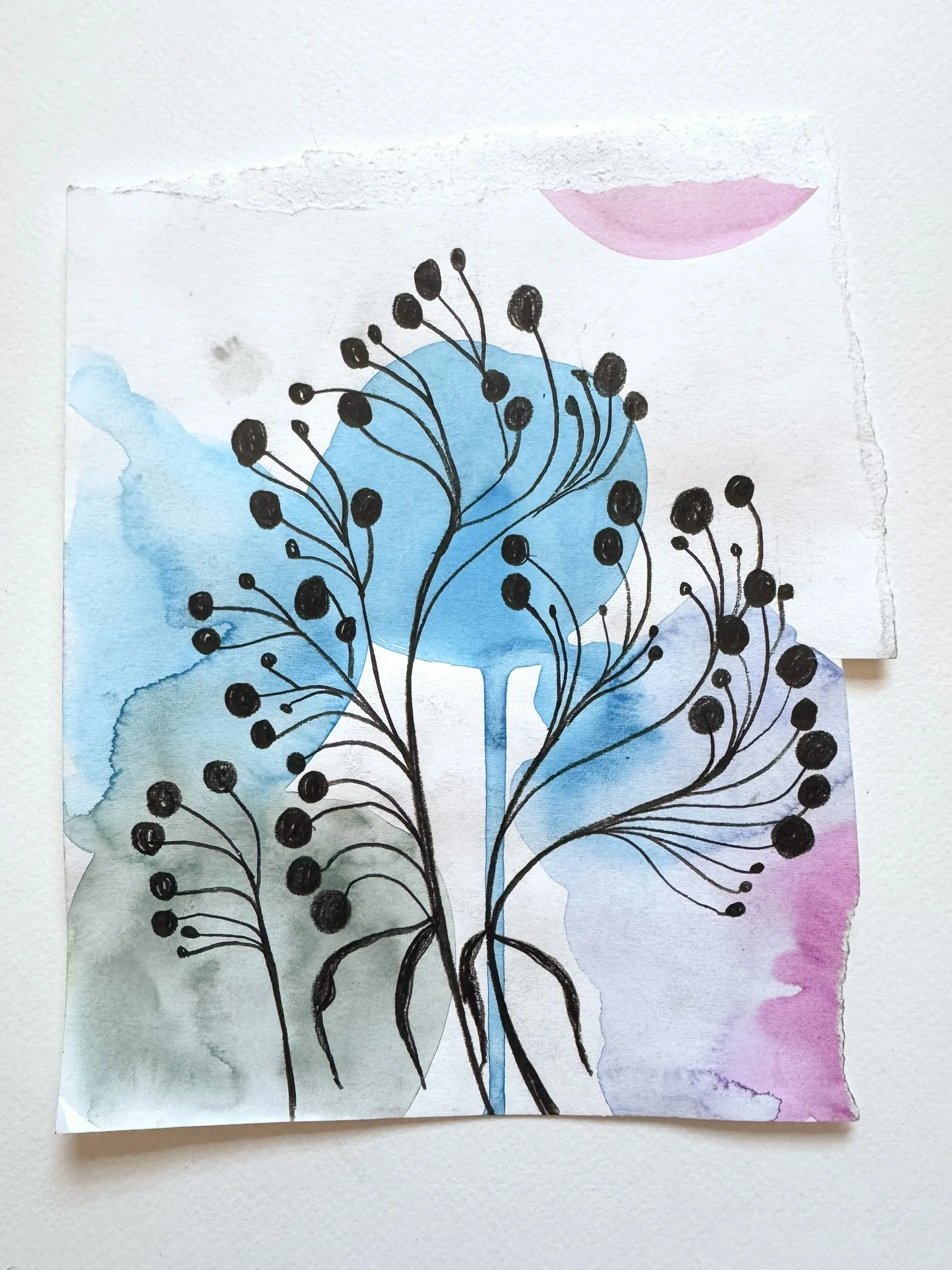
So this summer, I’ll be making space for nature, for noticing, for reading, for writing, for playing with art materials with no expectations. I’m not following a plan. I’m letting curiosity be the compass. Letting what feels nourishing and delightful gently guide me in the right direction…
Materials
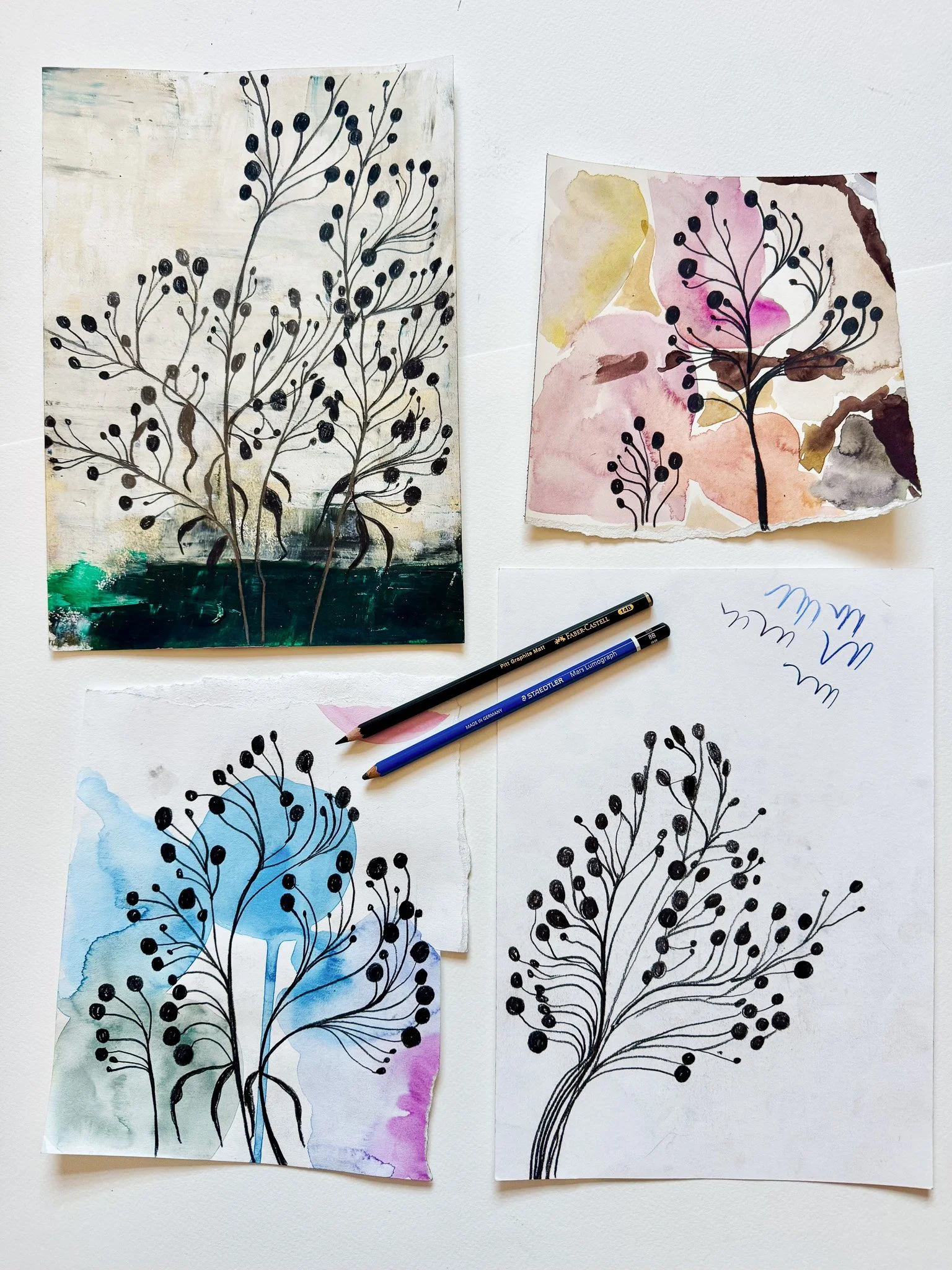
In this video I was drawing on the beach using two types of pencil:
Faber Castell Pitt Pencil Matt Graphite Pencil 14B
Staedtler Mars Lumograph Pencil 9B
These links are affiliate links, if you buy something through them, I might earn a small commission, at no extra cost to you. I only ever share the products that I actually use.
Let Nature Lead Your Art…
If you’re in need of a little creative refuelling and would like to make art inspired by nature, take a look at Nature and Nurture. This gentle, self-paced course invites you to explore natural forms, playful drawing, and semi-abstract mixed media, all rooted in the beauty of organic shapes, plants, and flowers.
“Each video causes me to think! As ever, your classes cheer me up and inspire me.” Janice
Available now for £48.

Giving ideas space and time
The art of slow, creative nourishment…
This is a love letter to slowness, open spaces and trusting our internal rhythms.
I naturally lean toward pace and productivity, hard work, maximum effort, ticking boxes, getting stuff done.
For years, I chased down life. Chased down ideas. I felt a constant pressure, self-imposed, mostly, to do more, move faster… to perhaps outrun self-doubt with high output.
I was never good at resting, or giving myself or my creativity time to breathe.
But in recent years, I’ve had to do things very differently. And I have learned to see things very differently too.
A stretch of ill health gave me no choice but to slow down. To rest. To stop pushing. To sit in the stillness I would’ve once rushed right past or filled right up.
And in that slowing down, I can now see just how unhelpful and unhealthy my old pace was.
Some of the best, most interesting creative moments? They don’t arrive when they’re being chased. They arrive when they’re being gently coaxed and given space to unfurl. They sneak up when I’m doing not much. When I’m sitting quietly, letting my thoughts drift with no goal, no plan. When I’m messing about in my sketchbook with no expectation of outcome. When I’m playing with art supplies and paper with no ambition of producing something important. That’s when ideas start to arrive, to call to me, to surprise me.
But giving yourself that kind of space is hard. It can feel wrong, lazy and unproductive.
We’ve been taught to chase the result, to be productive at all costs. But honestly?
I now realise that ideas often appear when we stop trying so hard. I’ve learned that good ideas rarely arrive on demand. They need room. They need time. They need the kind of space that we often rush to fill.
There’s a concept in Gestalt therapy I love and have mentioned before called the fertile void. It’s the space between things. The gap before the next step. And it can be rich, potent, wildly creative. Not because you're doing more, but because you're doing less. Trusting more. Forcing less.
There’s a reason we say, “let it percolate.” Real creativity isn’t a sprint. It’s more like a long, weird, wonderful conversation. You can’t always force it, or even see it happening.
But that doesn’t mean it isn’t. I used to panic in those quieter stretches when nothing seemed to be happening. Now, I try to make room for them, welcome them, positively embrace them.
Because not every season is meant for high output. Some are for wandering. Some are for wondering. And some are just... for waiting. Not every idea needs action right away. Some just need to be held. Noticed. Listened to. Kindled and coaxed. Allowed to percolate…
The book I show in the video is Folkish by Victionary Press, Hong Kong published May 2025.
Types of sketchbook
Here are some of the sketchbooks I like, but sketchbooks are a personal preference and come in so many different shapes, sizes and varieties, the sketchbook that is right for me, may not be right for you.
The best sketchbook to use is always the one you already own.
The Venezia Book from Fabriano
Stillman & Birn, Zeta Range
Talens Art Creation Sketchbooks
(Some of these links are affiliate links, if you buy something through them, I might earn a small commission, at no extra cost to you. I only ever share the products that I actually use. )
Keep reading…


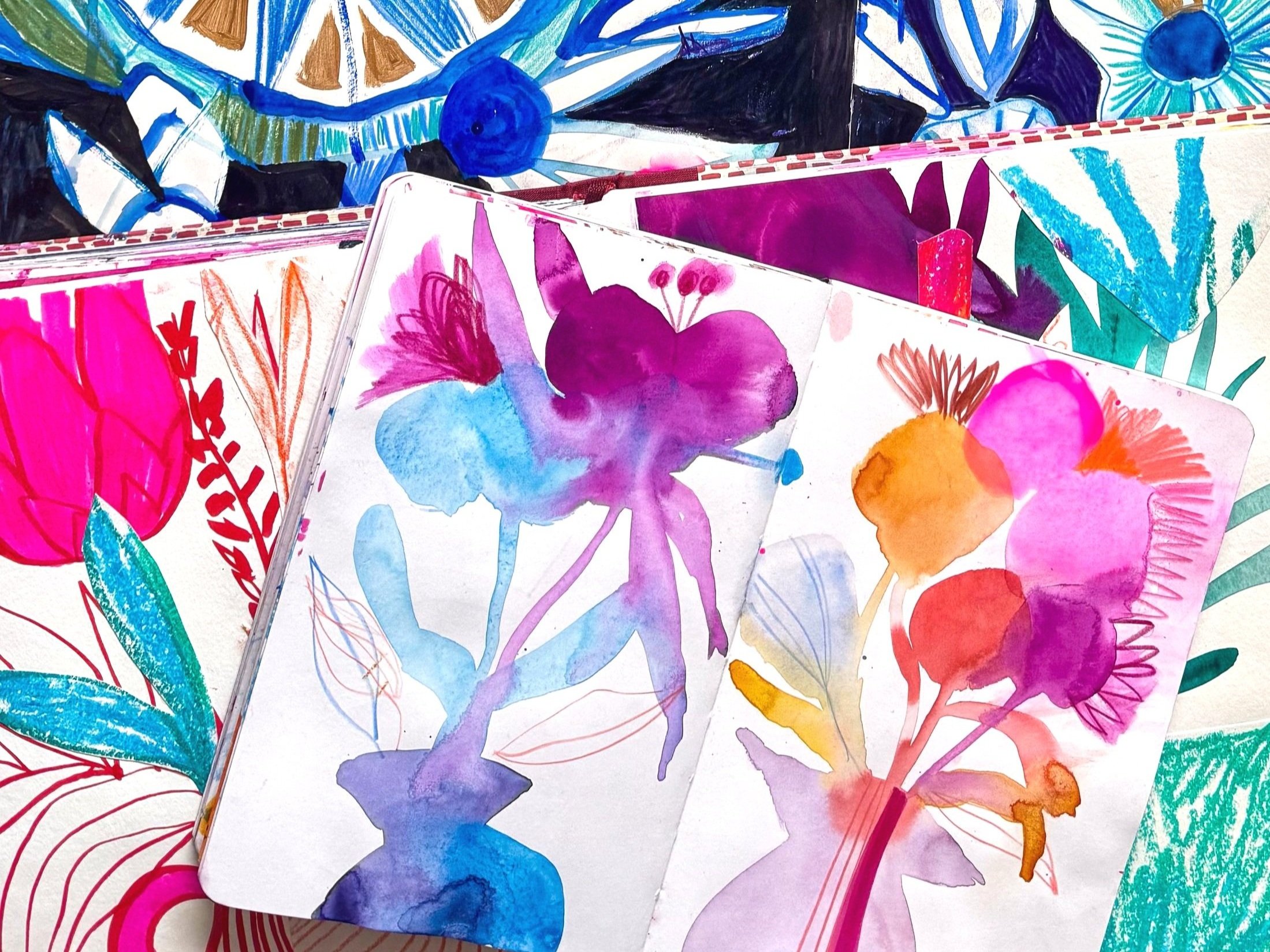
Art inspiration is everywhere…
Slowing down enough to notice…
Music credit: Supine, Peter Sandberg
This week, I walked to the train station. Nothing remarkable. Just the usual fifteen-minute route through the centre of town. But instead of rushing I slowed down. On purpose.
I set myself a small task: Notice what catches your eye. Not the big, obvious things, but the tiny, hidden interesting shapes and patterns, motifs and moments.
I paid attention to the shadows cast by railings. The silhouette of a plants against a clear sky. Stripes of fencing, angular and imperfect.
Noticing became a kind of tuning fork, helping me tune back into my own visual sensitivities. That part of me that’s sensitive to shape and pattern. Line and contrast. Colour and texture.
I paused often.
Not to capture the perfect photo, to simply notice. And as I looked, I found more.
More shapes. More visual whispers that I’d perhaps normally pass by.
It reminded me that inspiration doesn’t shout. It waits for us to seek it out, to pay close attention, to slow down enough to notice it…
This kind of wandering and wondering is one of the easiest creative practices I know. A way to gather and reflect. Because inspiration doesn’t always come from grand views or planned studio time.
Sometimes it starts in the space between errands, on a Friday morning. Walking through the centre of town, looking and really seeing.
If you try it, you might be surprised by what reveals itself.
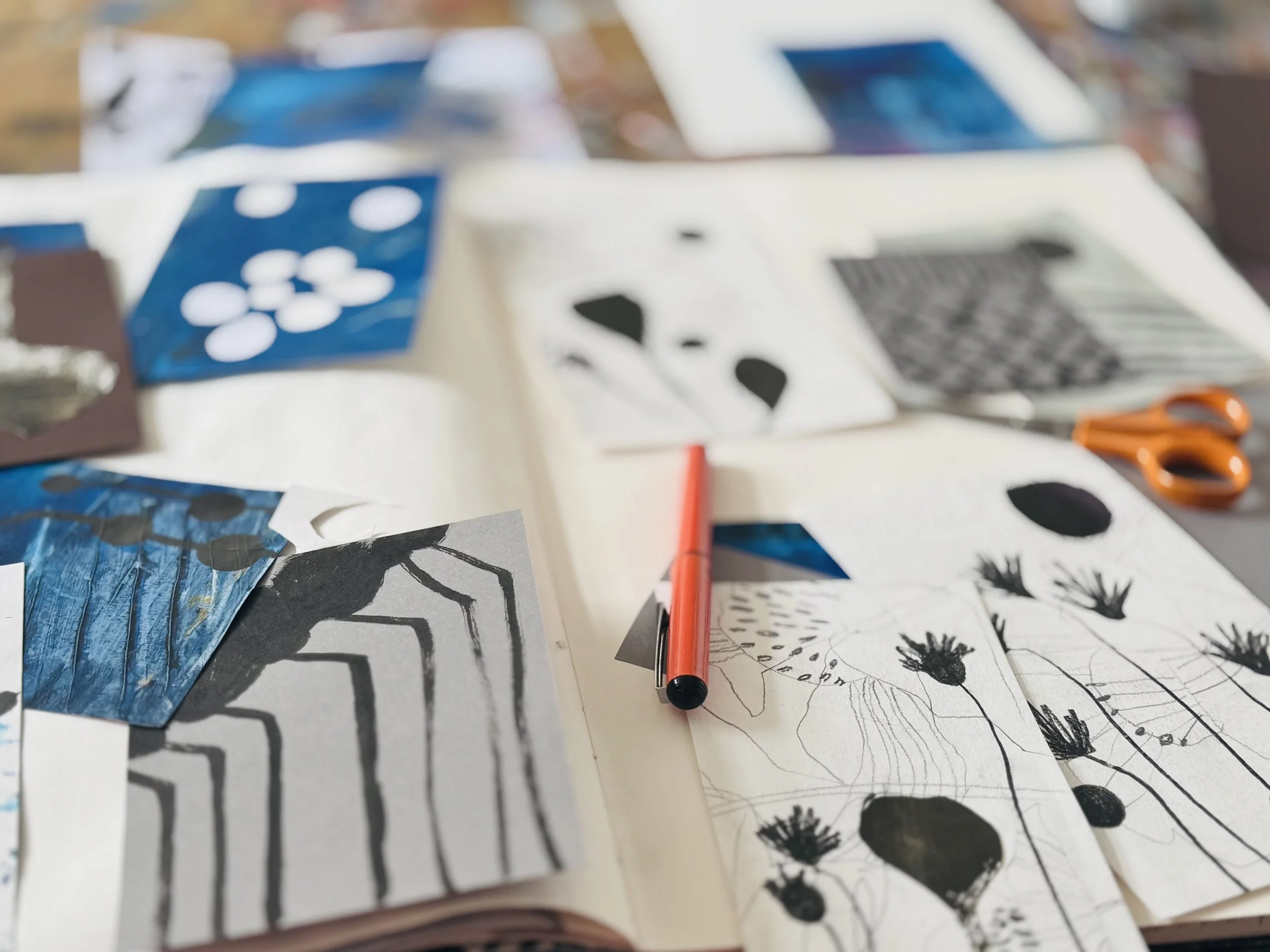


Materials
Here are some of the materials I was using in this video:
The paper I am using is mostly Academia Paper from Fabriano
The large A3 sketchbook is from a British brand called Daler Rowney
The small sketchbook is a Venezia Book from Fabriano
The black brush pen I am using is a Pentel pen similar to this one
The glue I am using was Liquitex Matt Gel Medium
(Some of these links are affiliate links, if you buy something through them, I might earn a small commission, at no extra cost to you. I only ever share the products that I actually use. )
Recommended Reads:
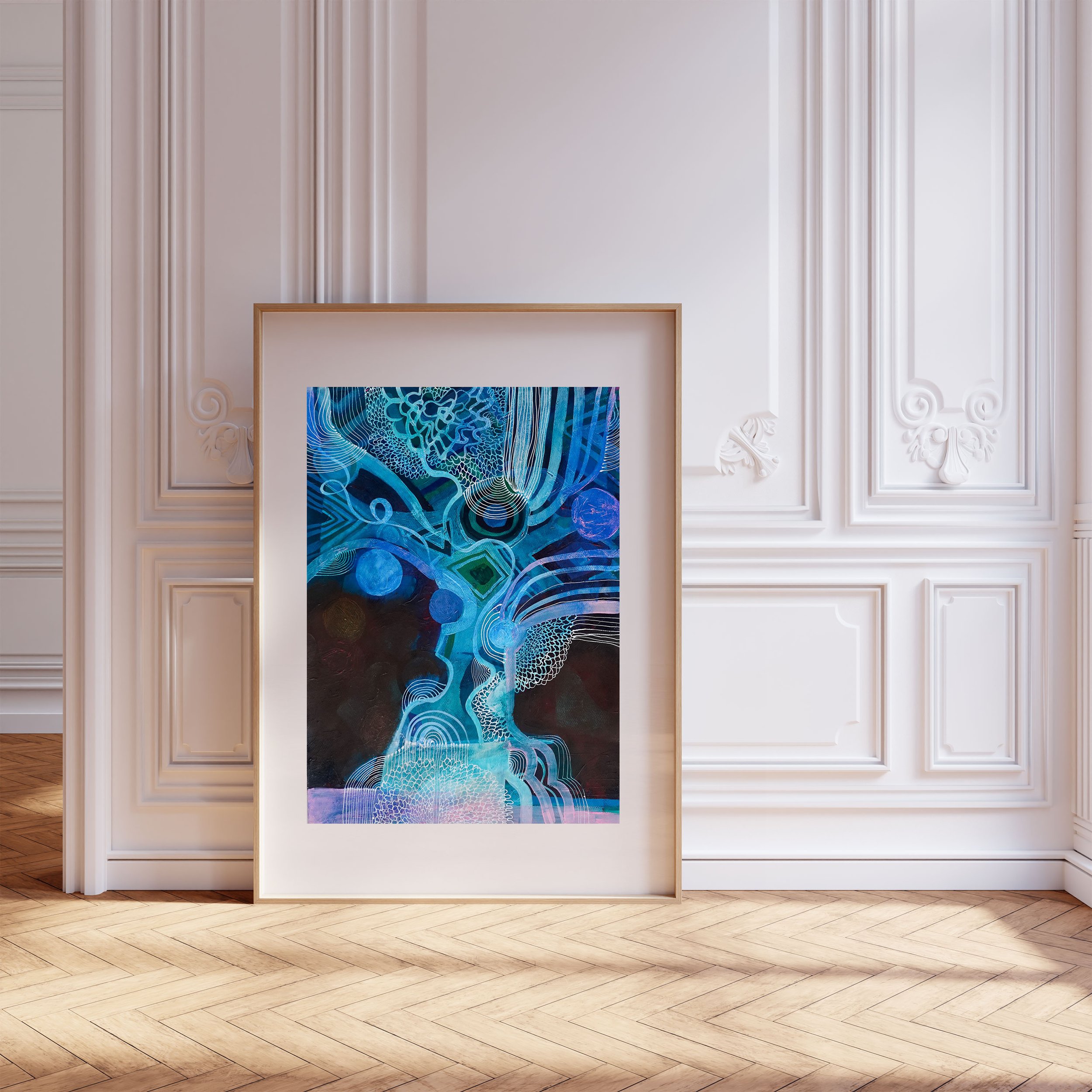
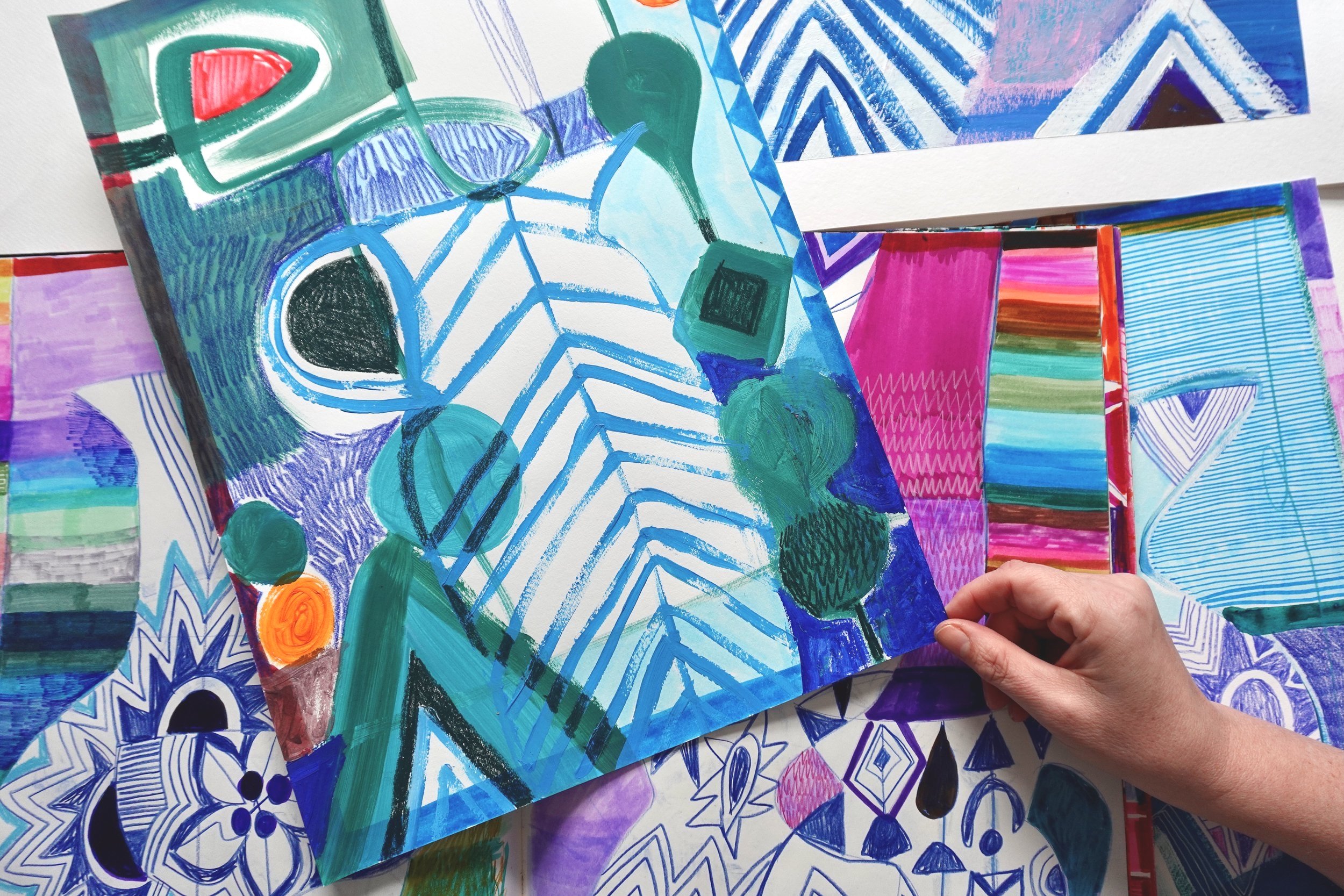


Creative compost and joining the dots…
A few thoughts on what my sketchbooks are really for…
Music credit: Stepping Stones, Laura Platt
Creative compost
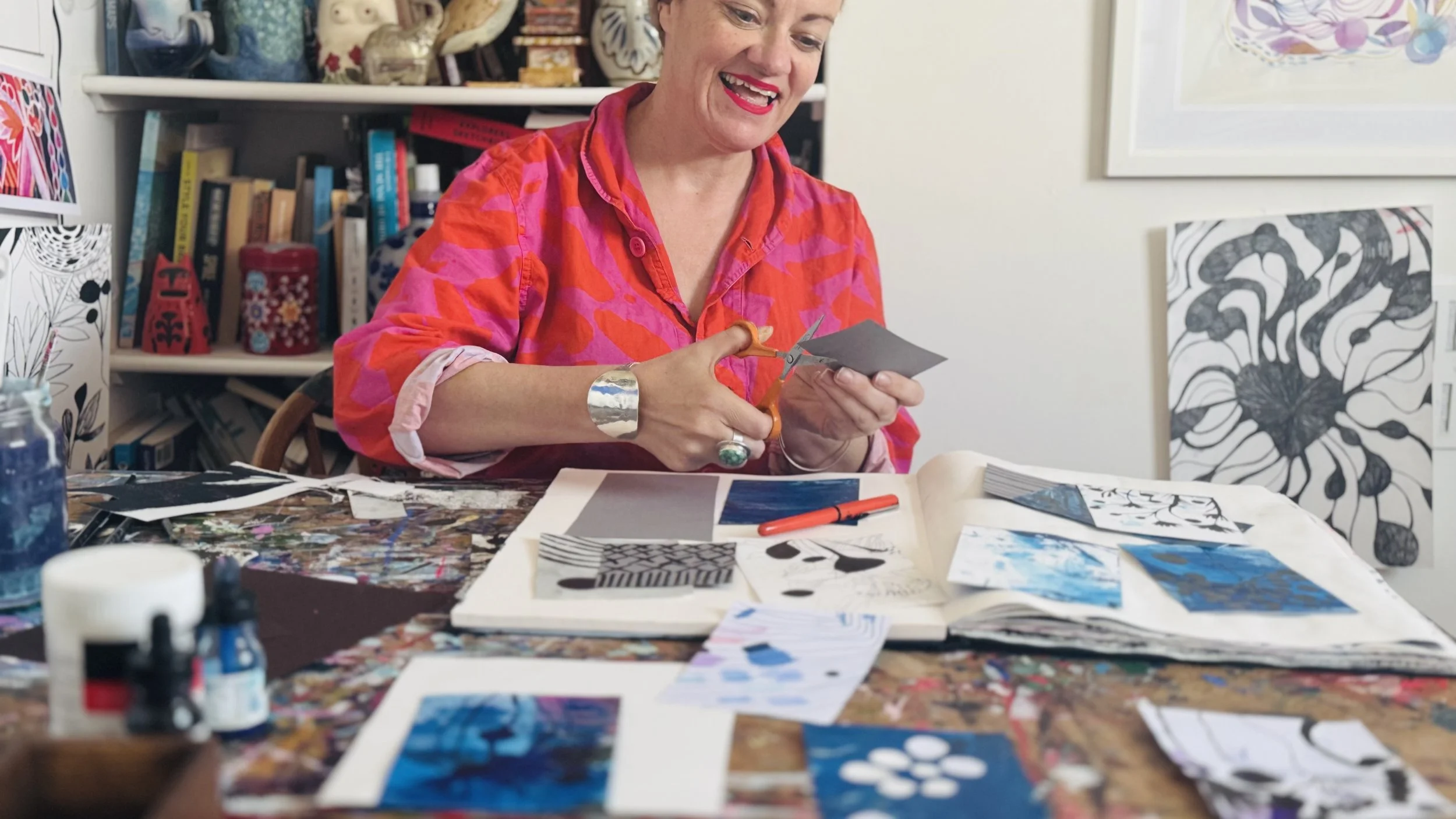
Sometimes people ask me how I copy my sketchbook pages into paintings. The answer is I don’t…
I don’t think of my sketchbook as a precursor, a rough draft, or a plan to follow.
It’s more like creative compost.


Slow growing sparks
Sketchbooks are the place where ideas are scattered, layered, scribbled, left to percolate.
Some grow slowly. Some never go anywhere. Some spark something else entirely.
I come back to pages from years ago that have been quietly waiting for me, I spot something and and think “yes, this”…
And sometimes things just appear in my paintings because of artistic muscle memory, things get lodged in the artistic psyche, embedded into the visual venacular because they were once explored and unpacked in a sketchbook.
A sketchbook can be the compost and soil where ideas take root, the archive where ideas rest or the workbench where they’re shaped.
Trust the dots will connect
Nothing is wasted, everything feeds everything…
I like this idea from Apple’s founder Steve Jobs, he’s talking about life, it also applies perfectly to sketchbooks and art:
“You can’t connect the dots looking forward; you can only connect them looking backwards. So you have to trust that the dots will somehow connect in your future. You have to trust in something, your gut, destiny, life, karma, whatever. This approach has never let me down, and it has made all the difference in my life.”
~ Steve Jobs, Stanford Commencement Speech 2005
‘Trust that things will somehow connect in the future’ seems like a great philosophy for art making.
My sketchbook isn’t where I plan a painting, it is more like the soil, the compost, the place from which everything grows, the place from which all the dots eventually connect…maybe.
Art supplies
The sketchbooks I am using in this video is the Venezia Book from Fabriano.
The heavy body paint is called Sennelier Abstract Innovative Acrylic Paint
(Some of these links are affiliate links, if you buy something through them, I might earn a small commission, at no extra cost to you. I only ever share the products that I use. )

Over and over. Again and again.
Repetition isn’t always boring…


Repetition isn’t boring. Returning to the same subject, again and again can be illuminating.
It’s not unoriginal. It’s a way of noticing, paying attention, discovering.
A way of building muscle memory, of distilling what you love.
Each return becomes an ongoing creative conversation. Not a rut, more like a rhythm.
A variation on a theme as old as art-making itself.
You don’t always need something new.
Sometimes you just need to stay. To linger. To return.
To pay closer attention to what already lights you up.
That’s how you learn about yourself as an artist. Again and again. Over and over…
P.S. These sketchbook pages grew out of an idea I teach inside Sketchbook Magic: Experimenting with Colour & Pattern If you’d like to try it too, the class is always open, always available for £20.
Joy as a compass…
Thoughts on finding a style and leaning in to what you love…
I used to think I had to “find my style.” Pick a lane. Pick a niche. Pick a version of myself that made sense on the internet.

But the more I tried to choose...the less like me it all felt. So I stopped chasing a style. And I started following joy.
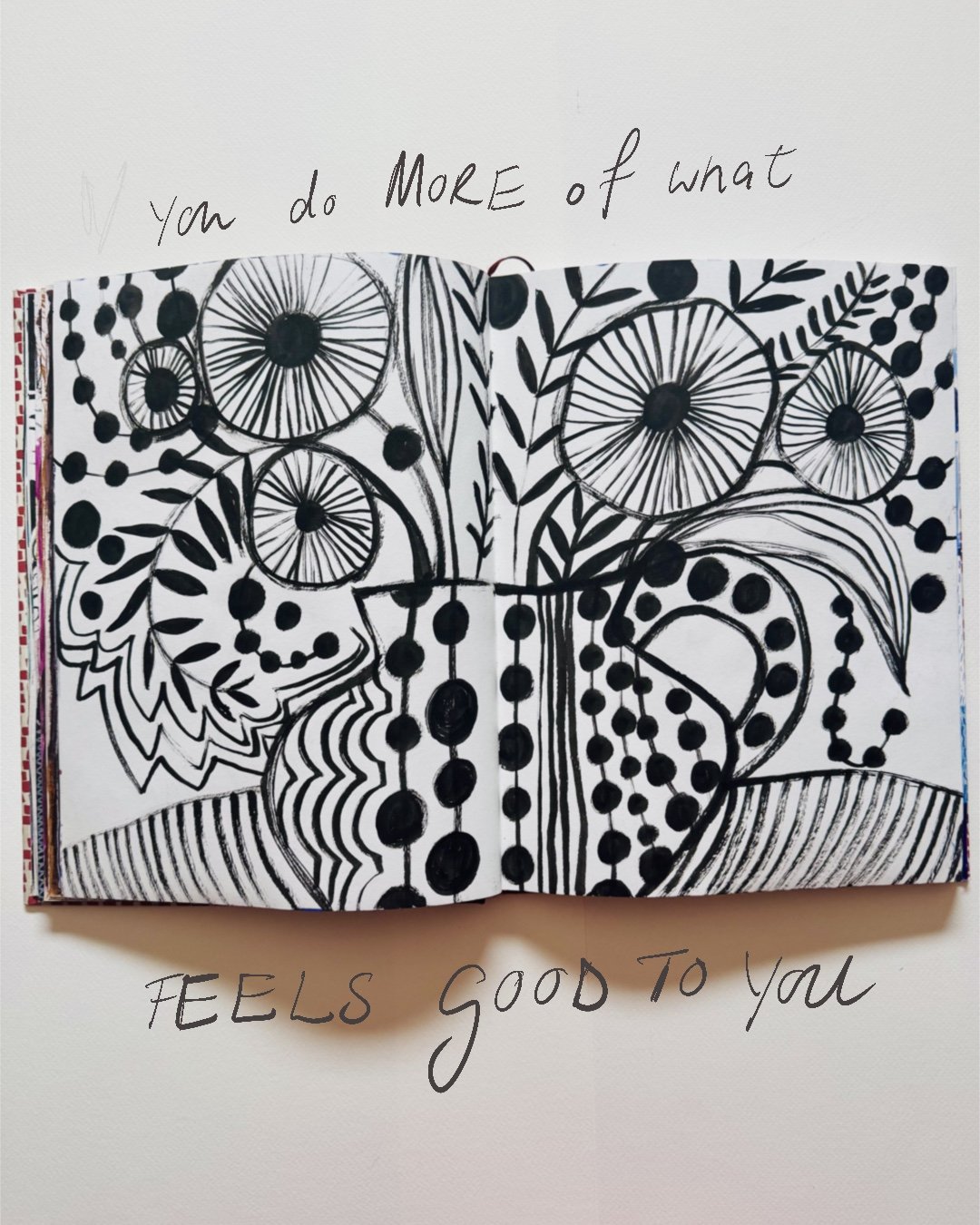
The delight of a scribbled mark.
Colour combinations that made my heart sing.
The lines that happen when you’re not overthinking, when you’re not trying too hard. And after years of this, I can tell you: You don’t have to find your style. If you follow what feels good, it’ll find you.
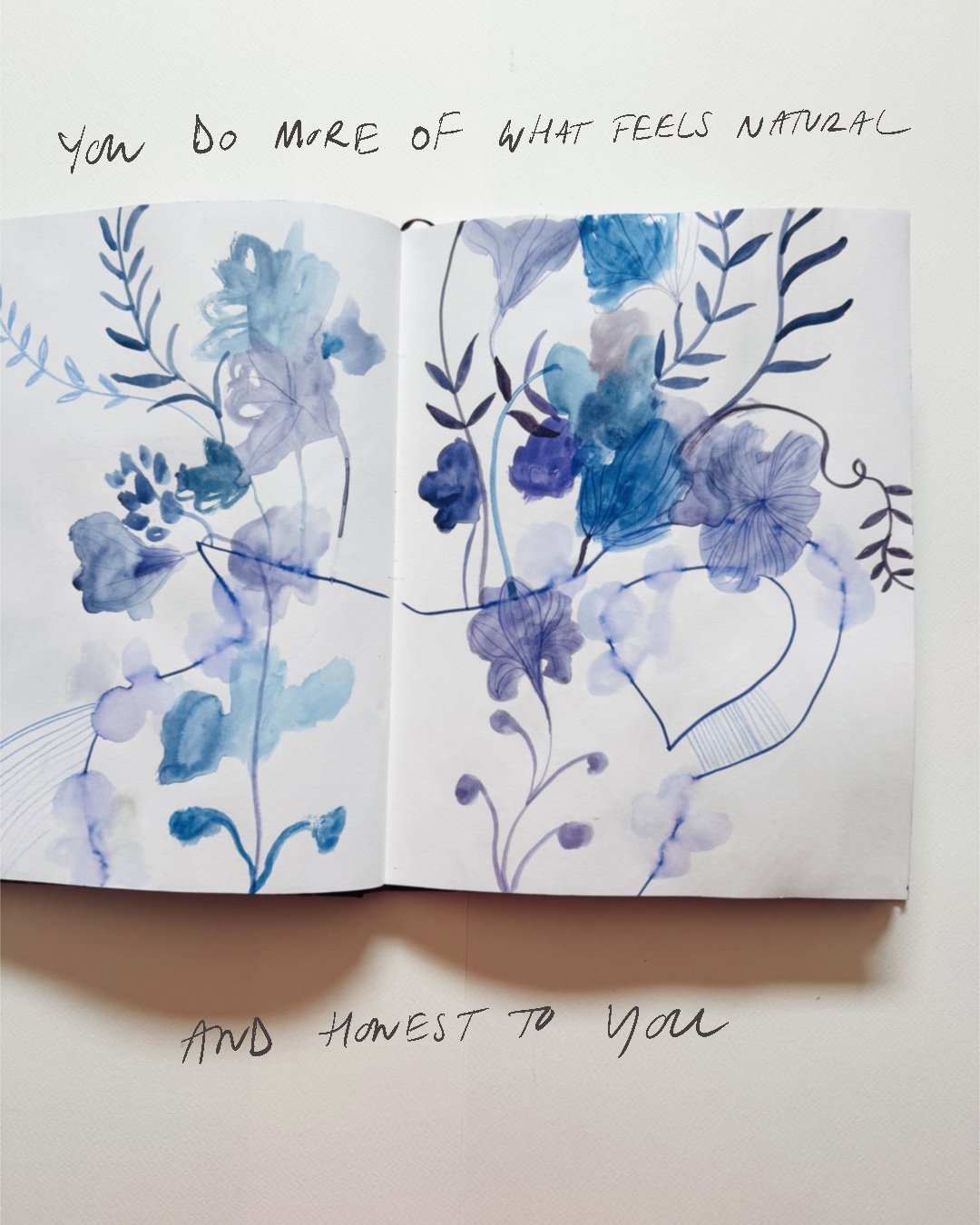
You don’t have to find your style. If you follow what feels good, it’ll find you.

Because joy isn’t just a feeling or a byproduct of art making. It’s the compass. The method. The map that leads you home within your own your art.
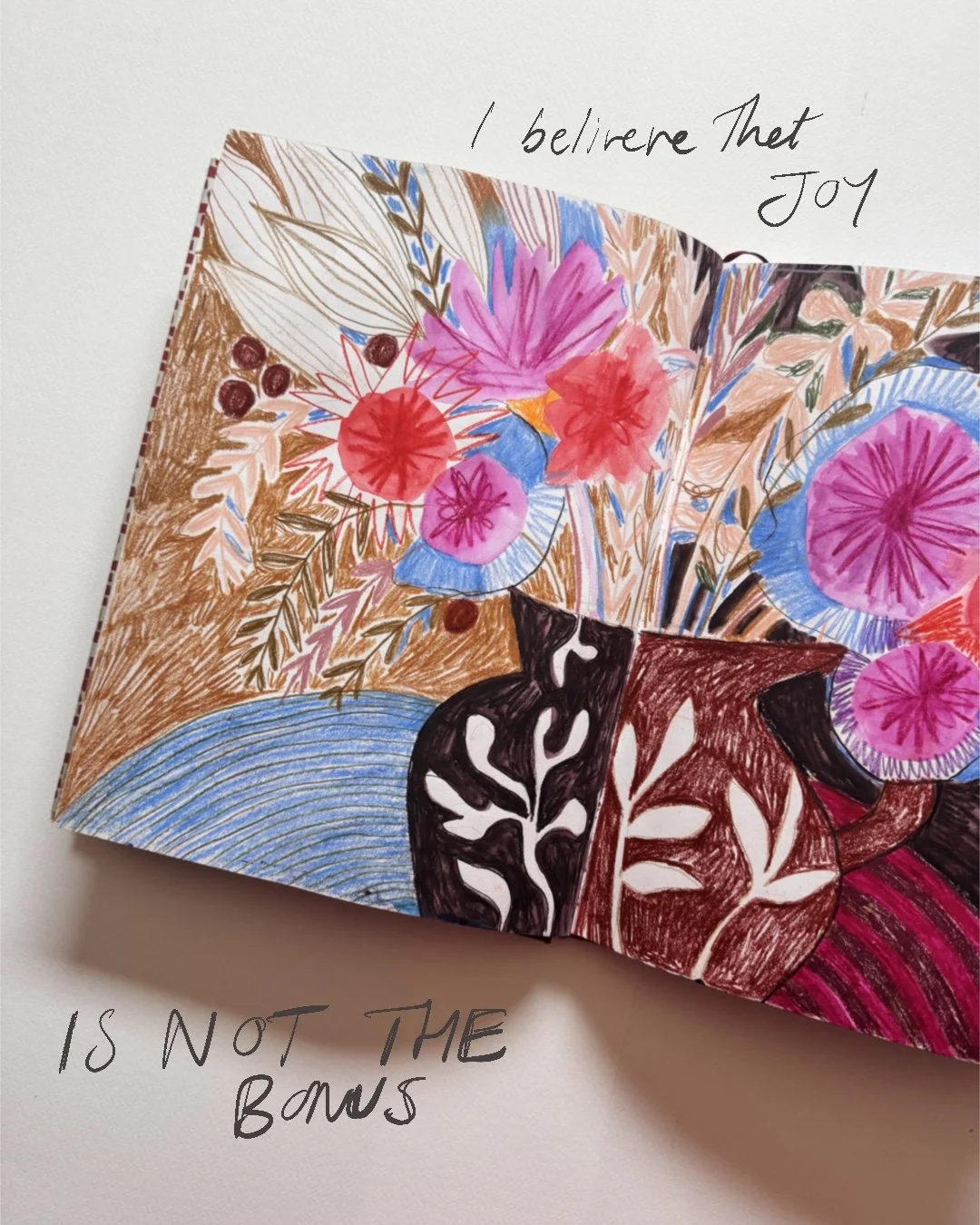
Paying attention to all the things you love in your own art is the best way I know to make art that feels good and that embodies your style…
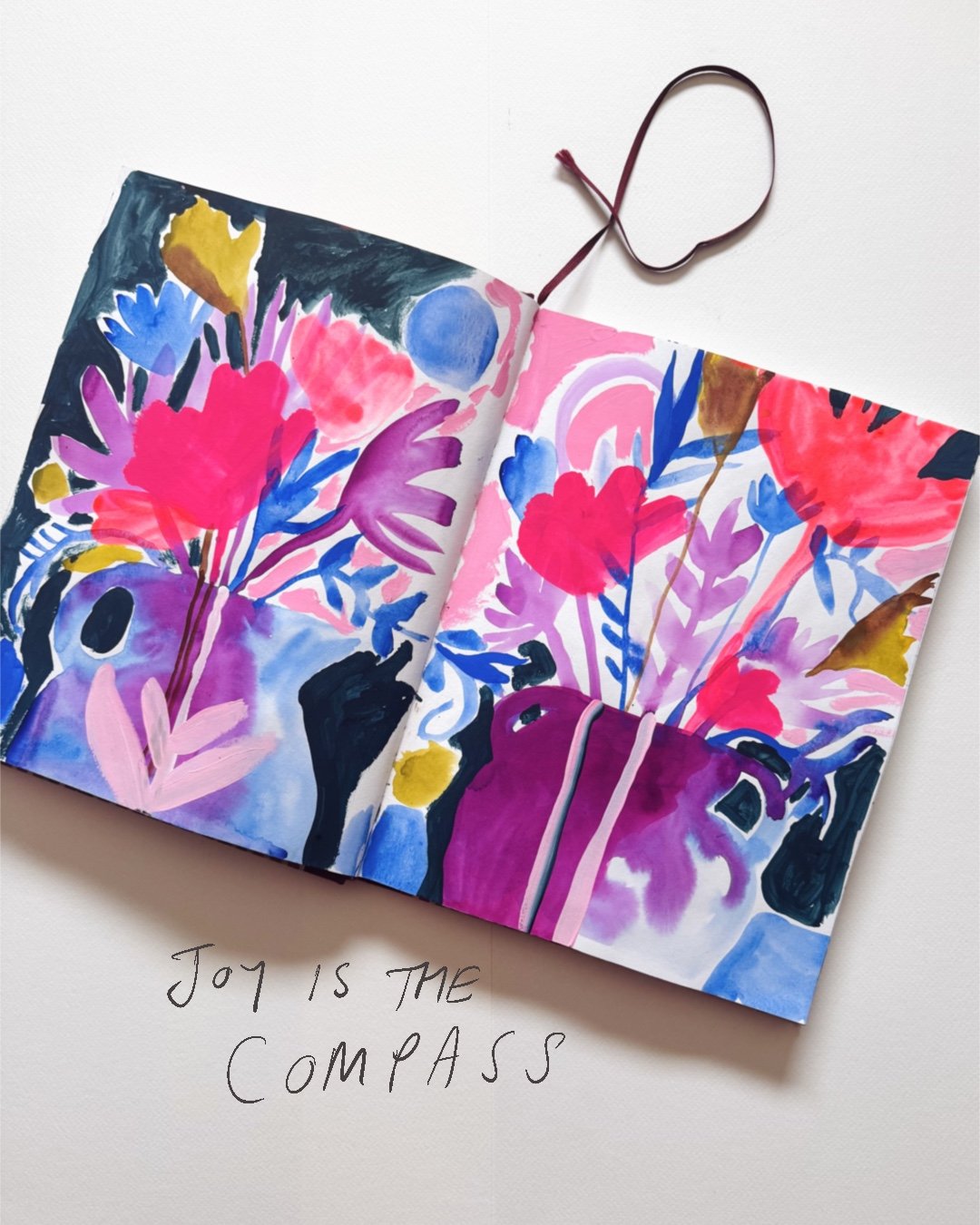
P.S. Joy Filled Flowers is a self-paced sketchbook class that helps you loosen up, experiment with mixed media, and bring joy back into your creative process and sketchbook practice. Online. On-demand. £58